Mindsight: Meditation & Sleep
My responsibility:
Company:
Challenge Highlight
Problem Context
As I listened to our users, I found three key problems:
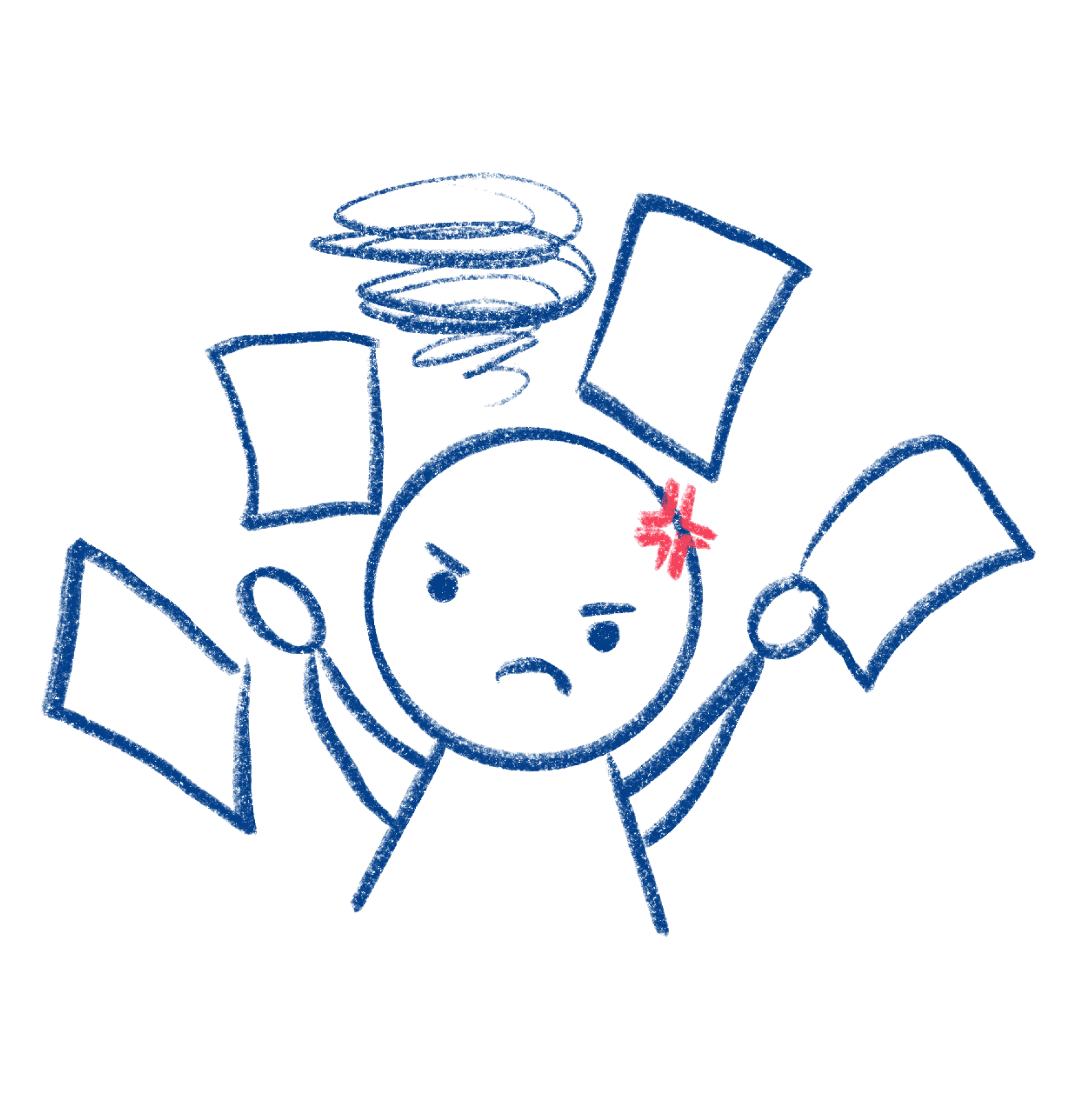
Stress, anxiety, and burnout
Users felt emotionally drained by high-pressure environments and had little time or energy for self-care.

Lack of expert guidance
Users often supported others, but had no one to help them reflect, reframe, or process emotions.
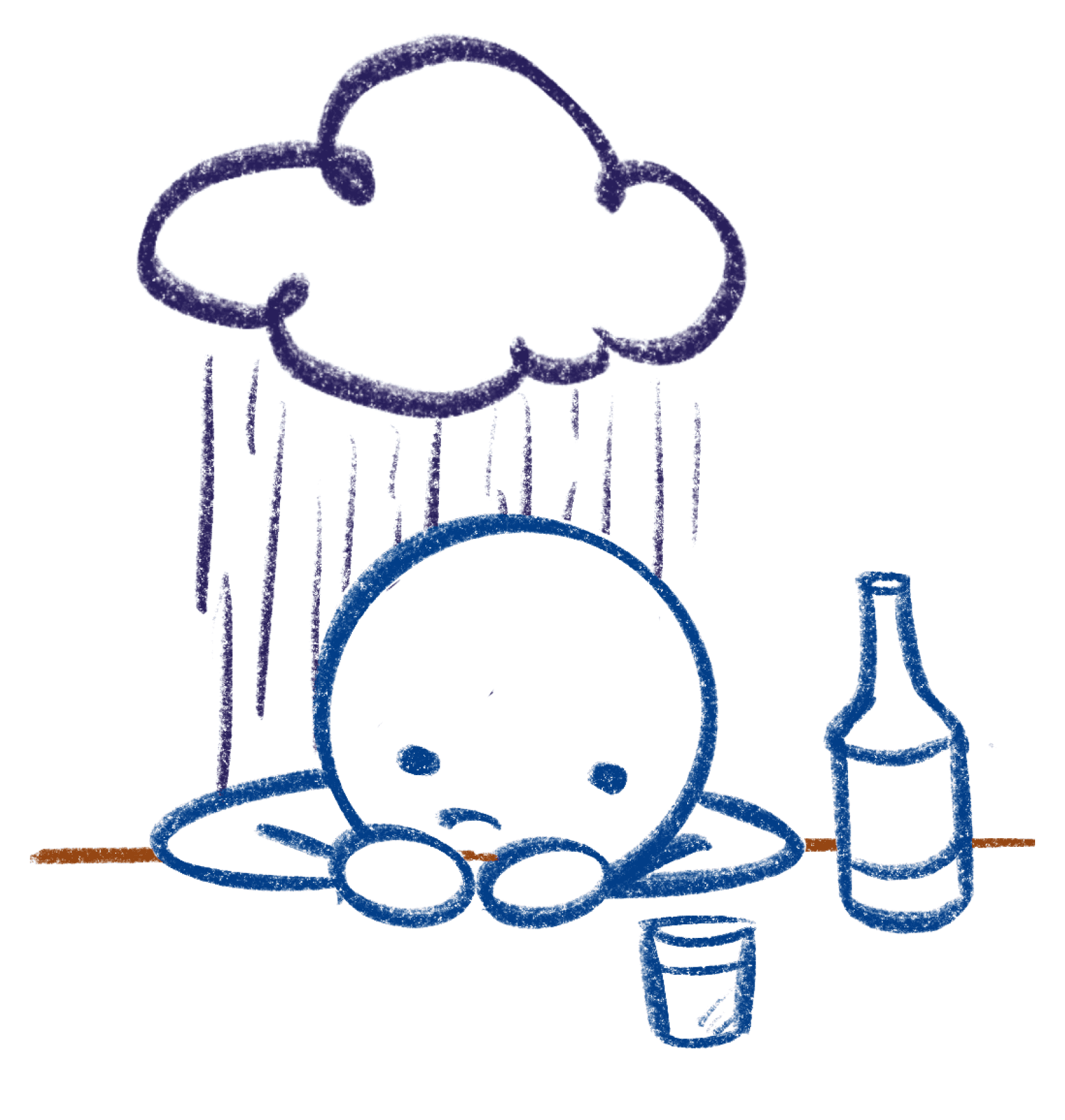
Lack of support & appreciation
Users wanted to feel seen and supported, without exposing personal details or being judged.
That's why this question guided my design decisions:
The Question:

Research
User Interviews
Desk Research
Competitor Analysis

Synthesis
Interview Analysis
Personas
AI Personality

Ideation
Feature Concepts
Flowcharts
Wireframes

Design
Final Design
Prototype

Deliver
QA Tests & Updates
Product Launch
Research Results
User Interviews
I used Affinity diagram to get insights and brainstorm design ideas:

These research insights shaped the MVP direction:
Employees experience:
Extremely busy schedule
Our users work a lot! Sometimes even 10-11 hours a day!
Stress, secondary trauma, anxiety, depression, and burnout
As social workers, they have emotionally demanding workload
To cope with mental challenges, employees prefer:
Solo well-being methods
Like breathing exercises, self-reflection, and mood tracking
Social support
Like talking to someone, peer support, and seeking help from experts
Spend too much time on consultations
They can spend less than 25 min for the whole experience
Share personal details about their struggles
They don't want to pressure others and share personal sensitive information
Synthesis
Persona
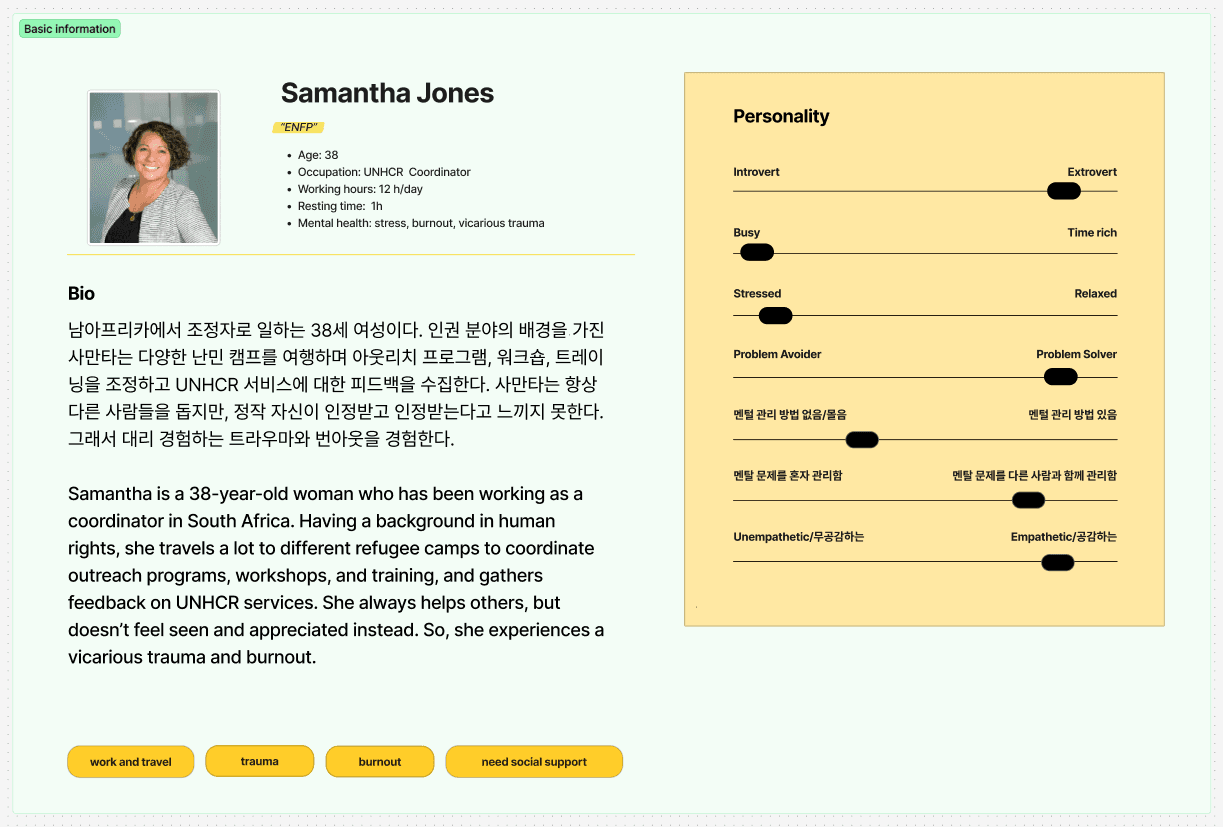
Based on research insights, I developed three personas that represented the characteristics of our users:


Synthesis
Research Results
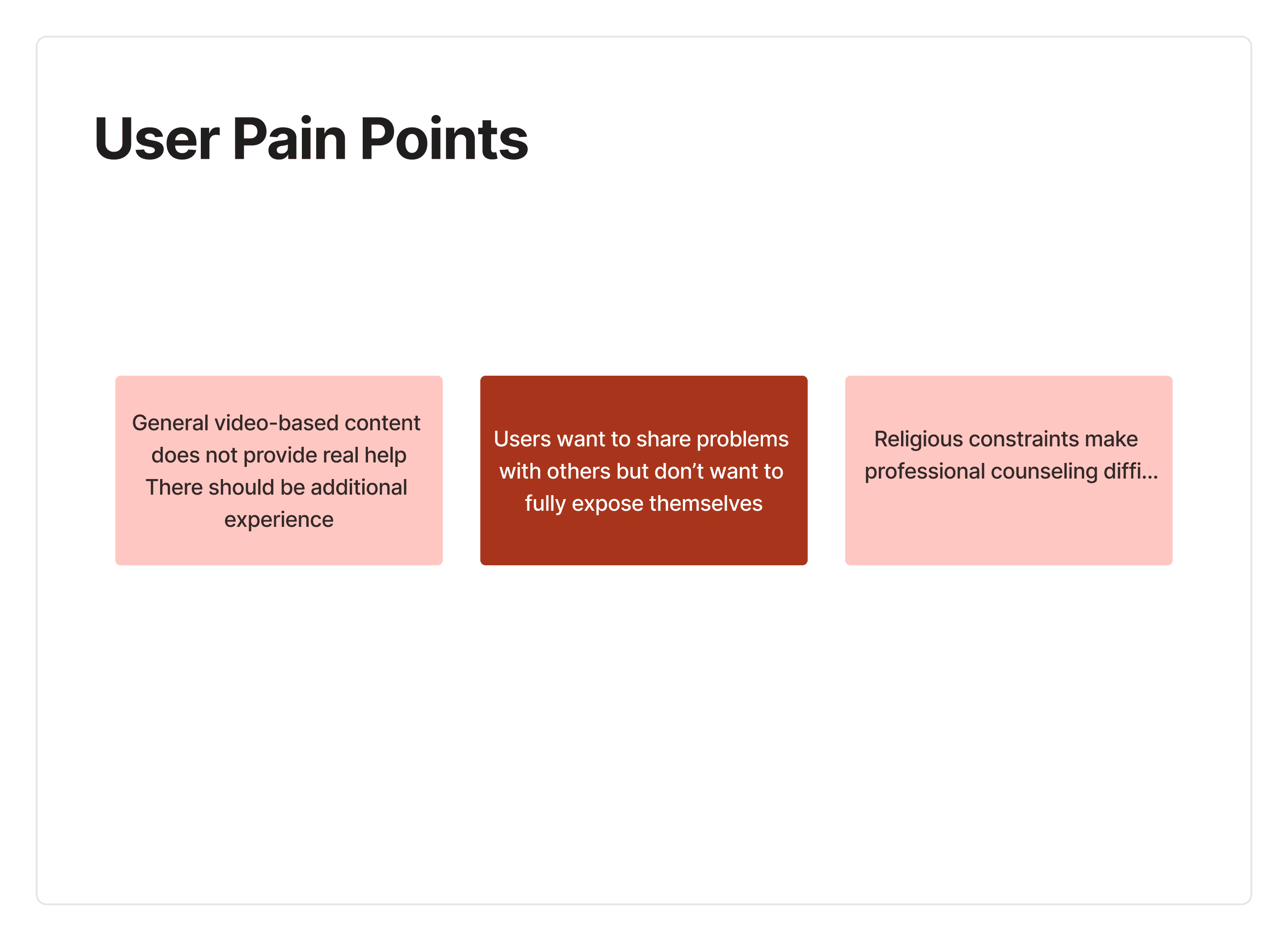
Based on user research, multiple product directions were possible.
My responsibility was to define and address user needs related to emotional support, reflection, and social connection.
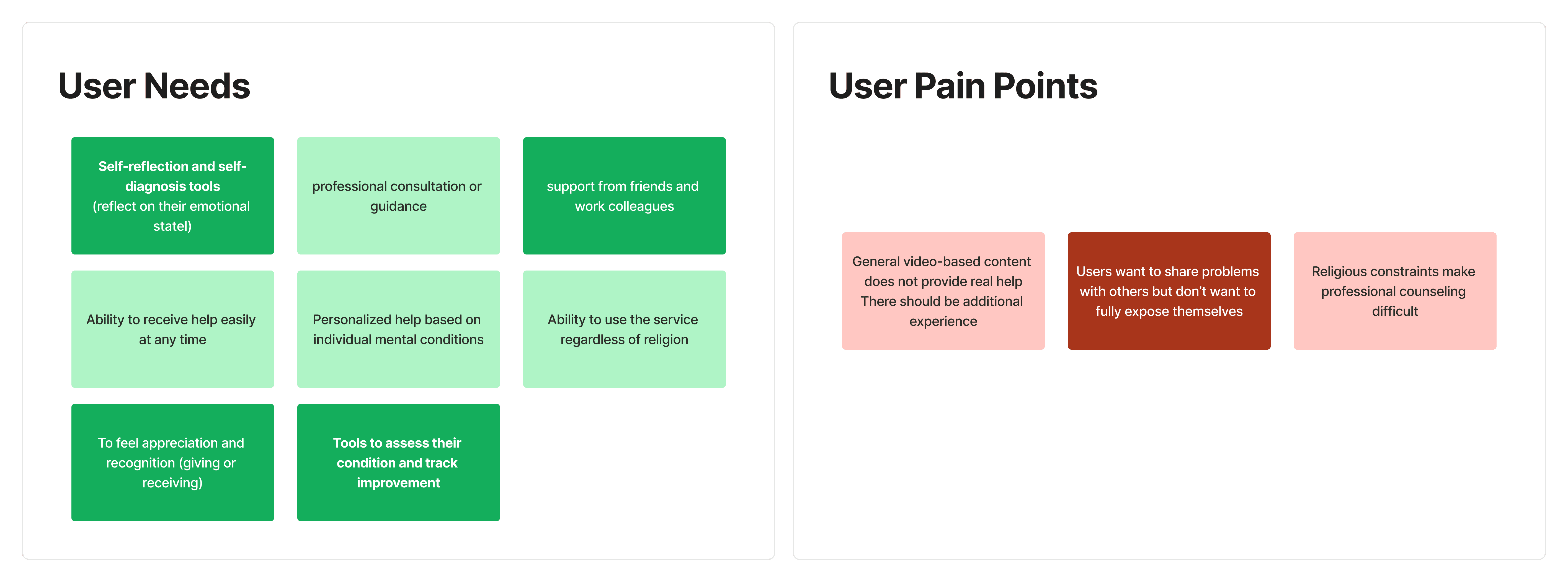
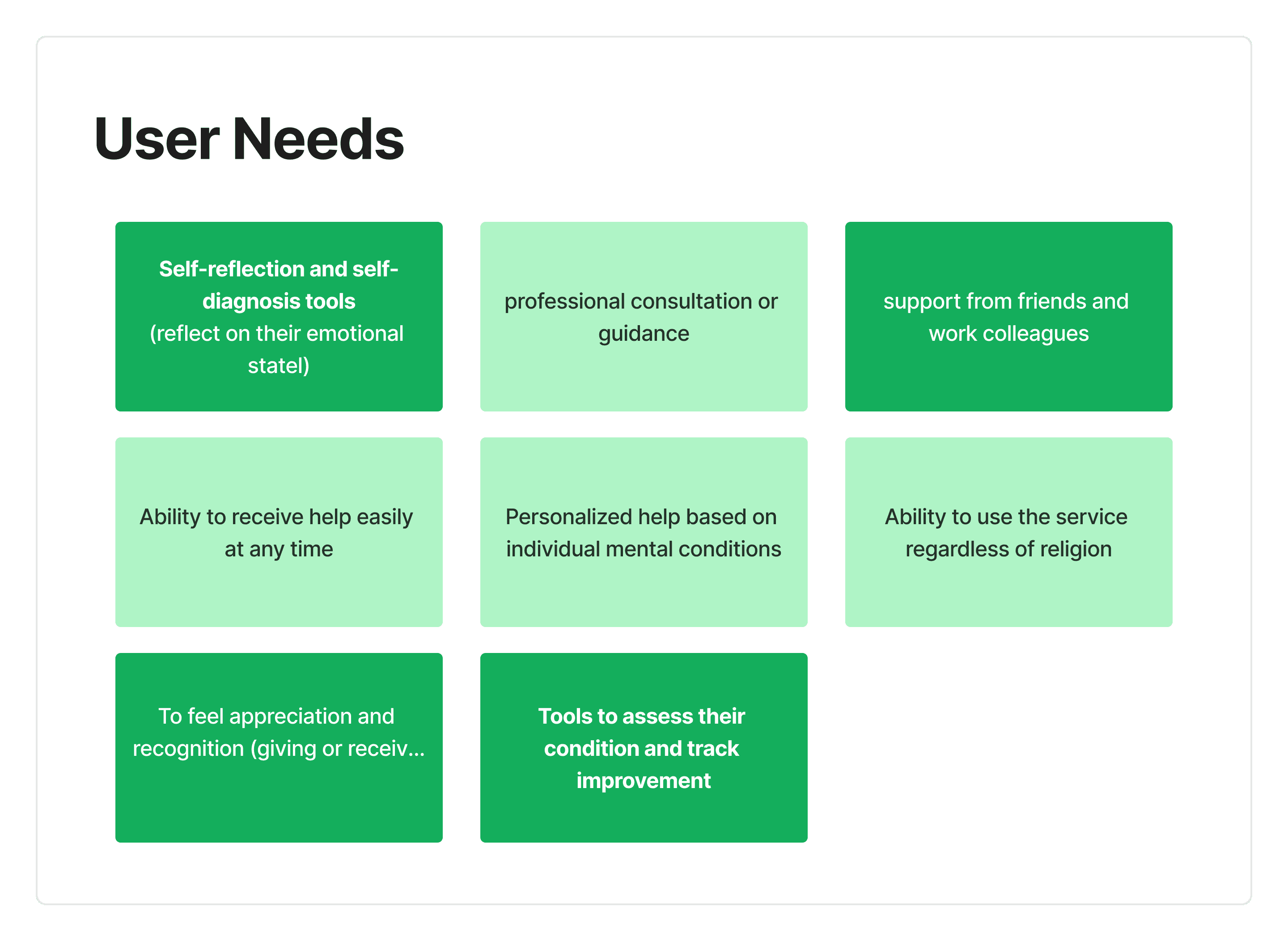
The following needs and pain points directly informed the features I owned:
My goal:
Ideation
The Inspiration: Small Gestures That Matter
There was something else that helped me and my coworkers to recharge:

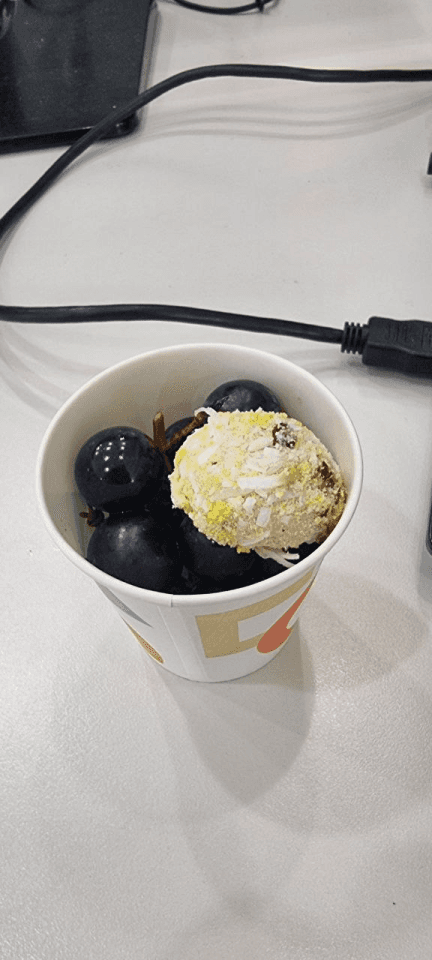

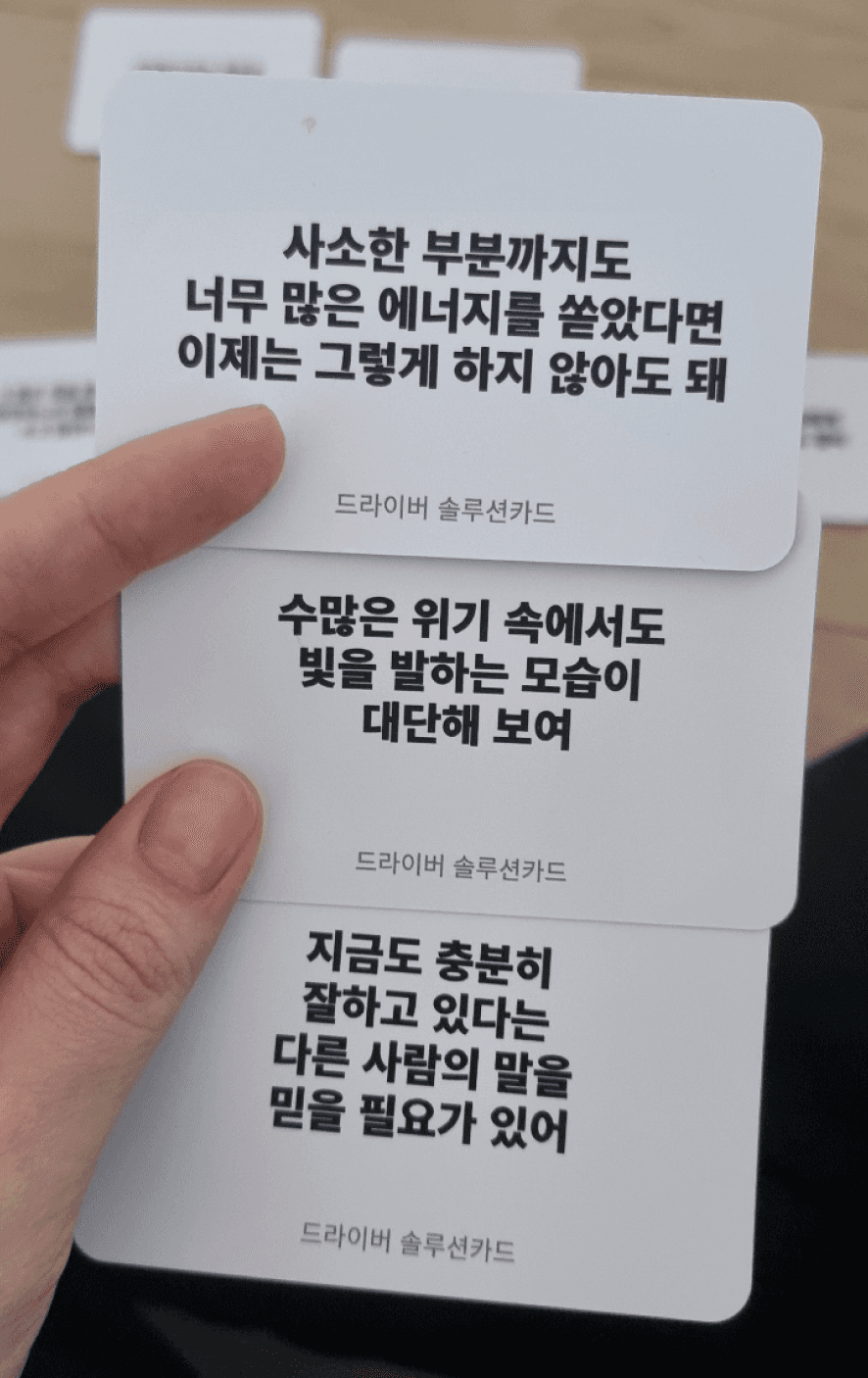
These weren’t grand acts of support, but they but they still mattered a lot🥰
That's how it clicked:

Insight 1:
Ideation
Where to introduce new gentle support features?
We intentionally avoided building a heavy wellness “system.”
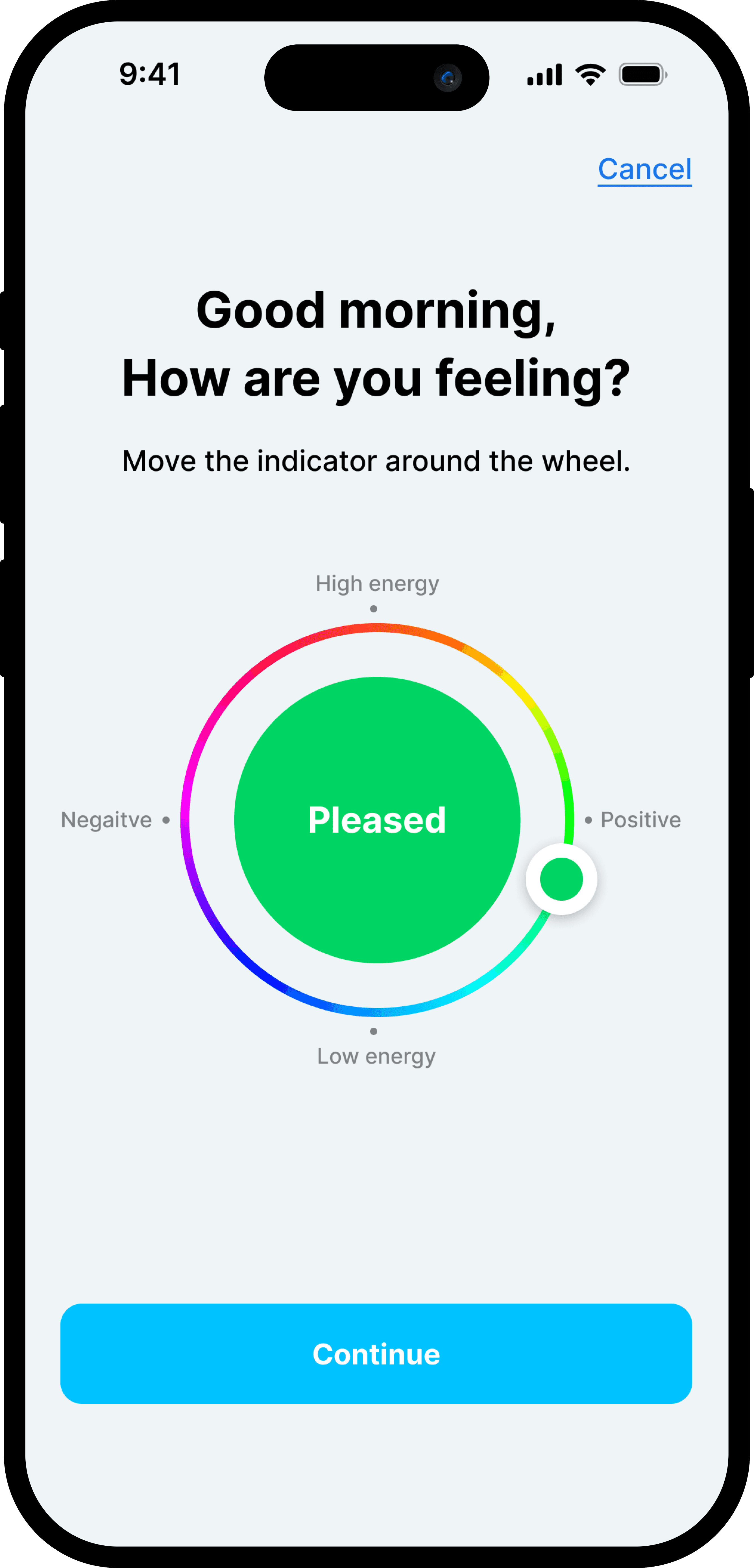
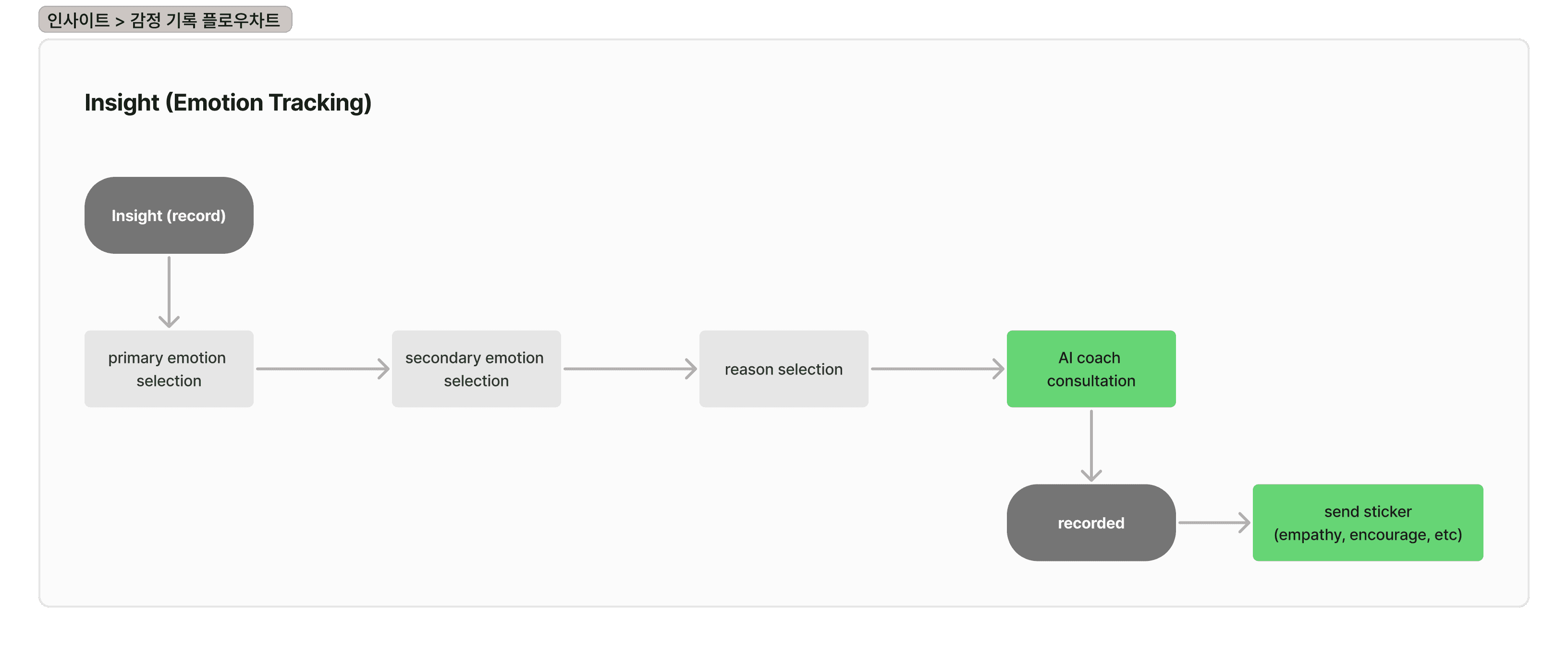
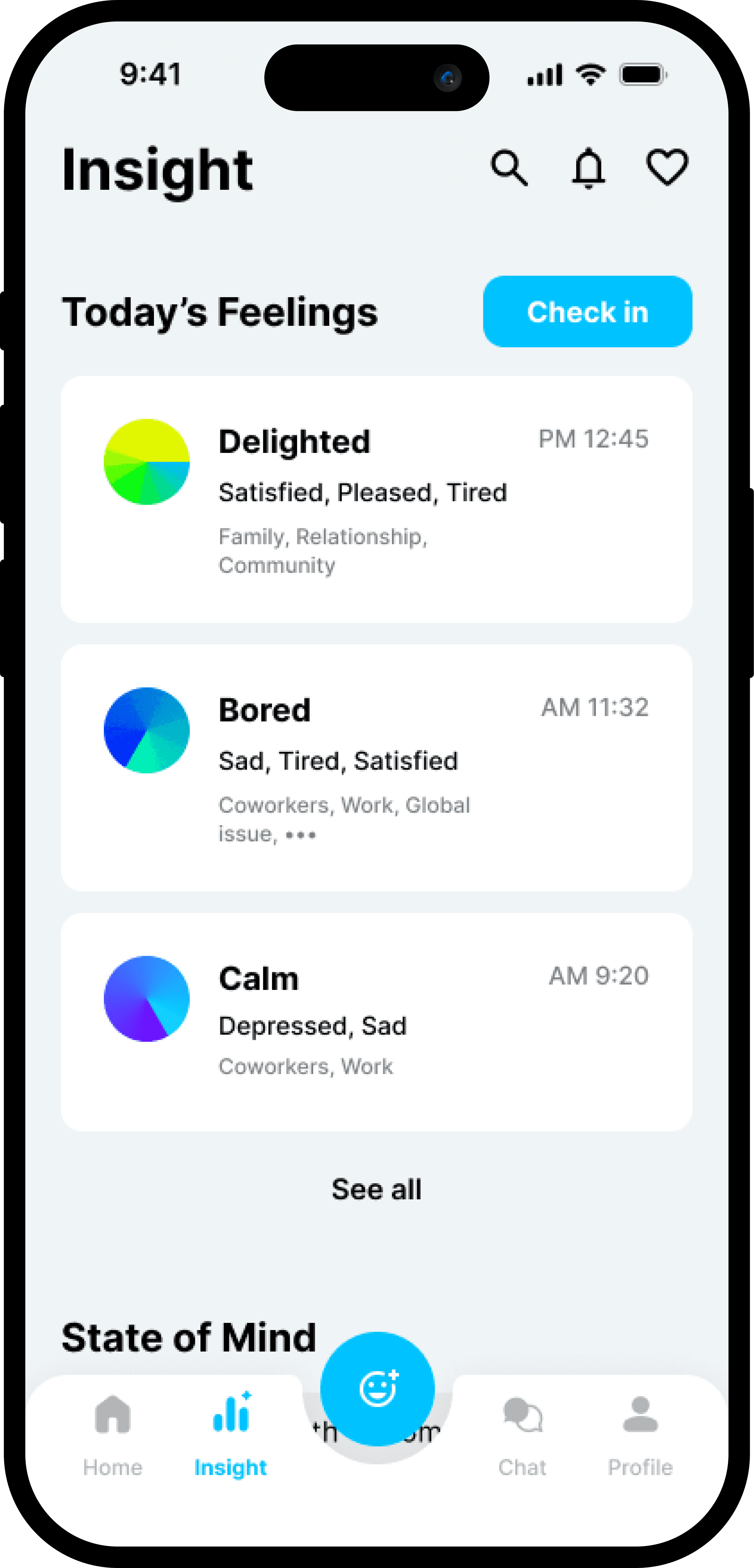
During earlier design discussions, the team had already planned an emotion tracking feature, a moment when users slow down and become emotionally open. This made it the most natural and respectful place to introduce support (similarly to how small, thoughtful gestures from coworkers helped me during difficult days).
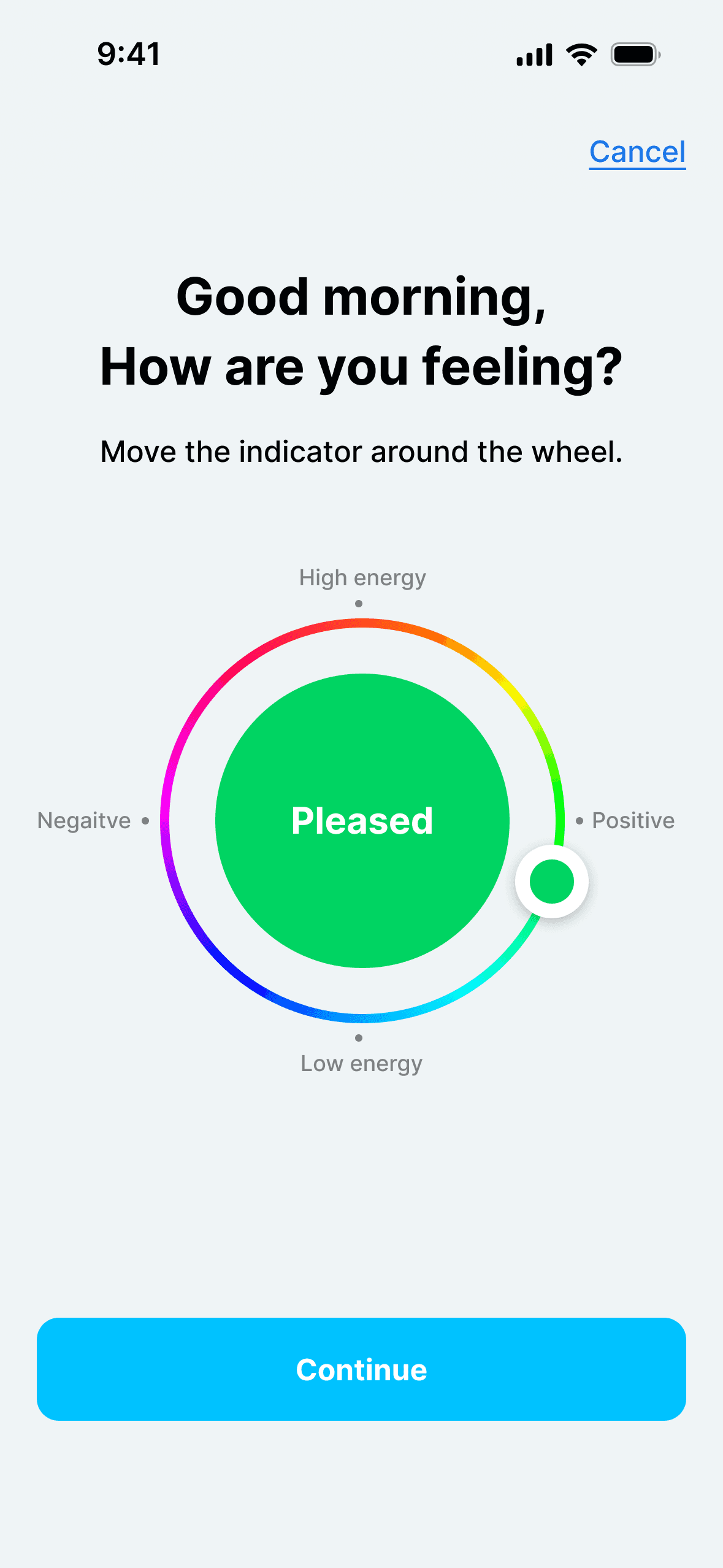
Emotion tracking became the gateway to support:
Anonymous support
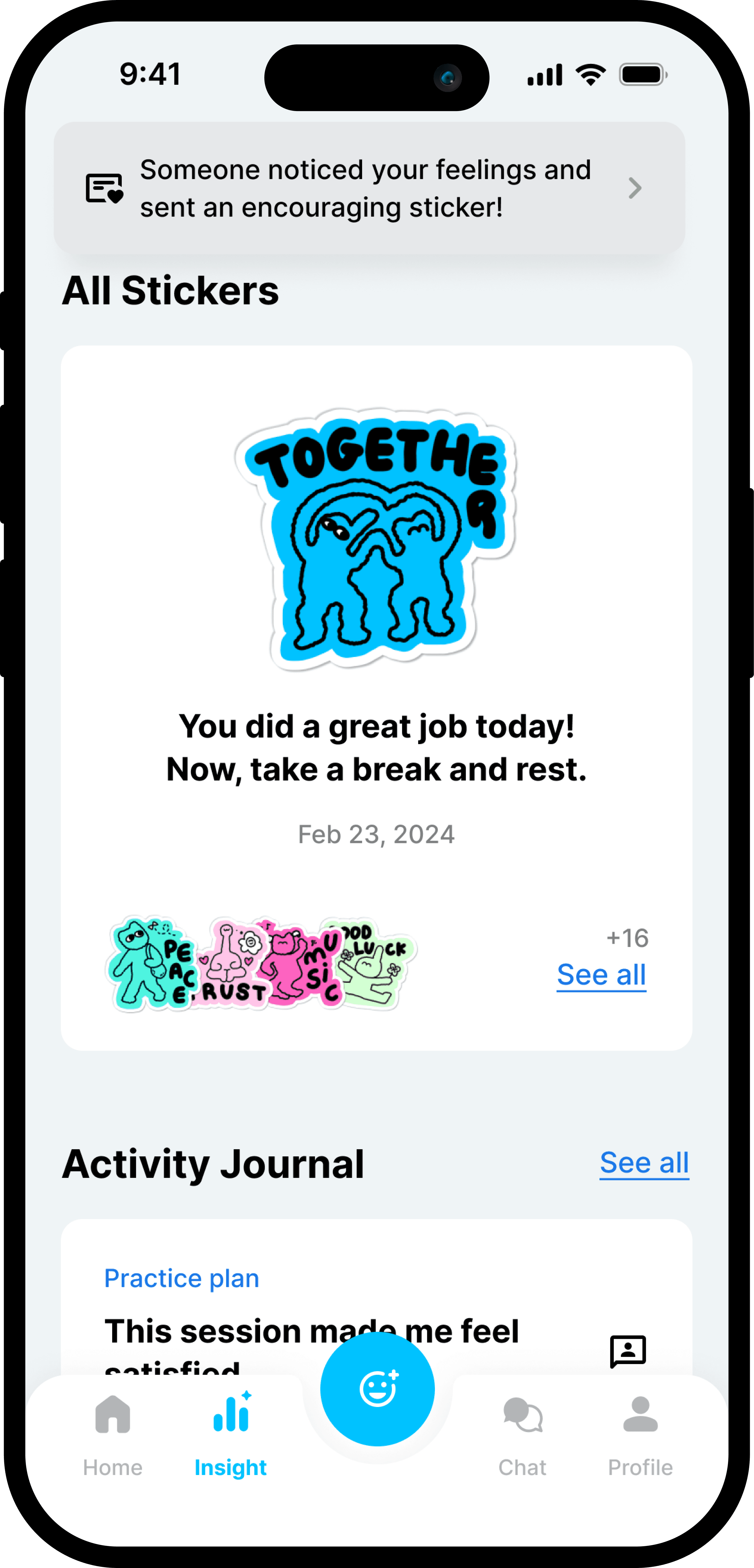
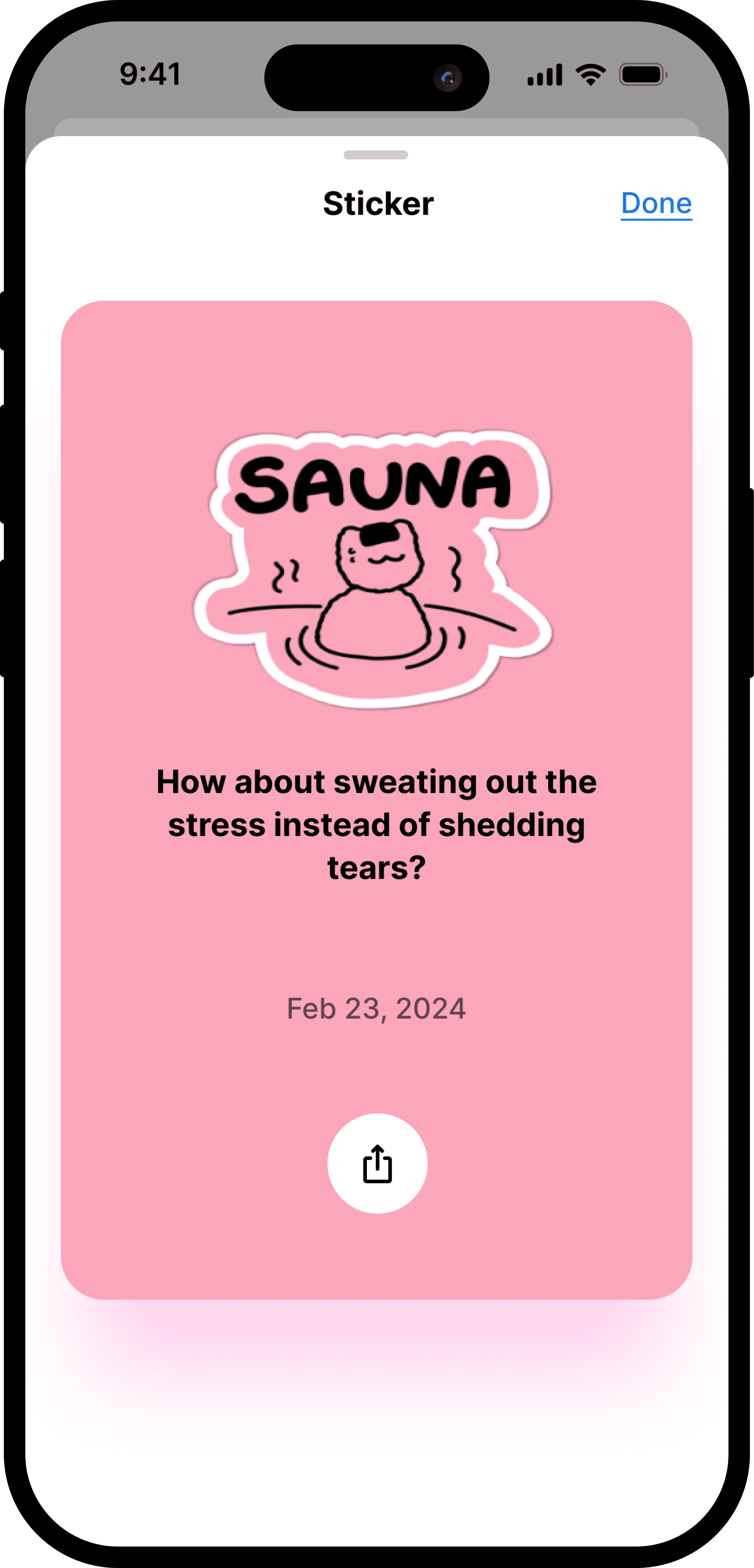
A lightweight system that allows users to empathize, comfort, and support each other without sharing personal details
AI-guided reflection
A calm, always available guide similar to a wise mentor or team leader
Personalized support
These ideas were later reflected in our plans and flowcharts:
Design
Design solutions
1.
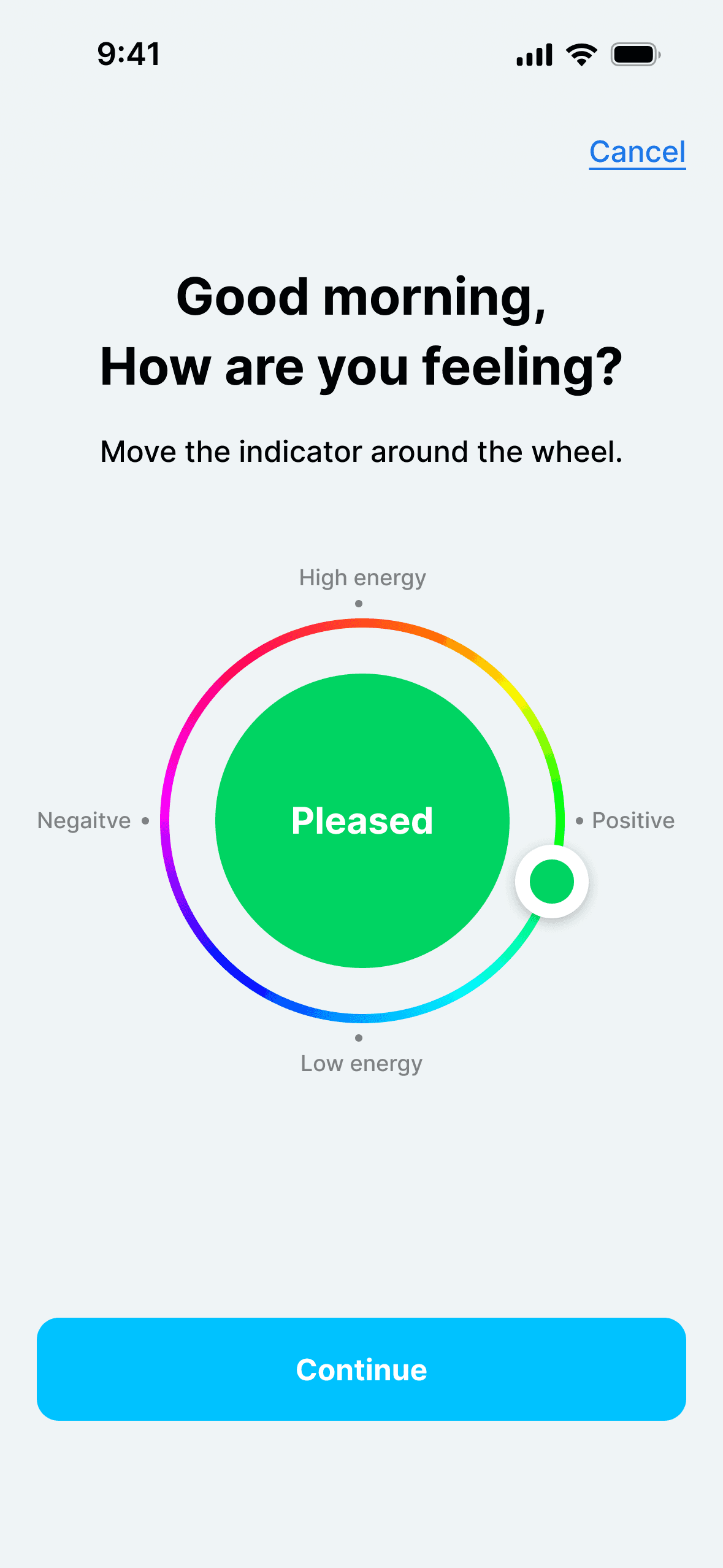
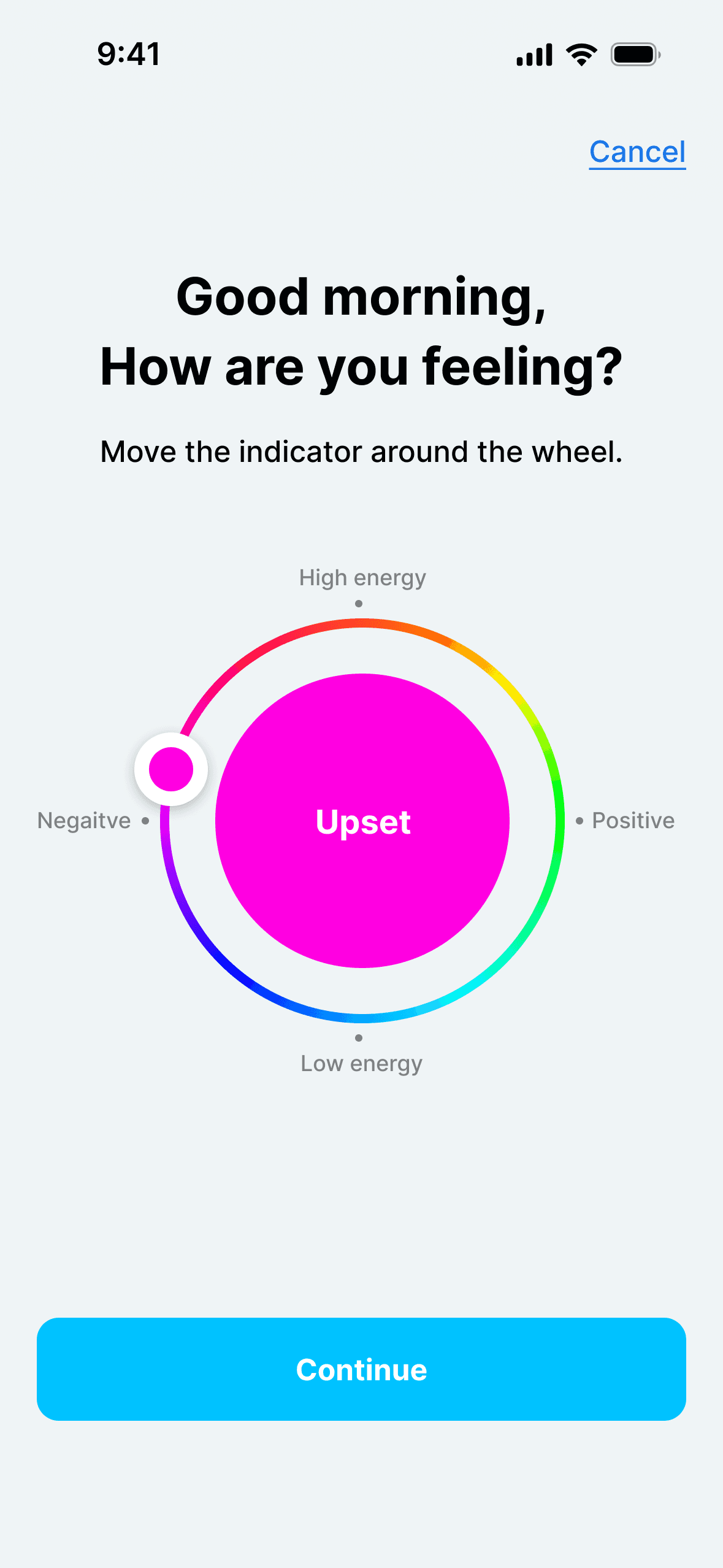
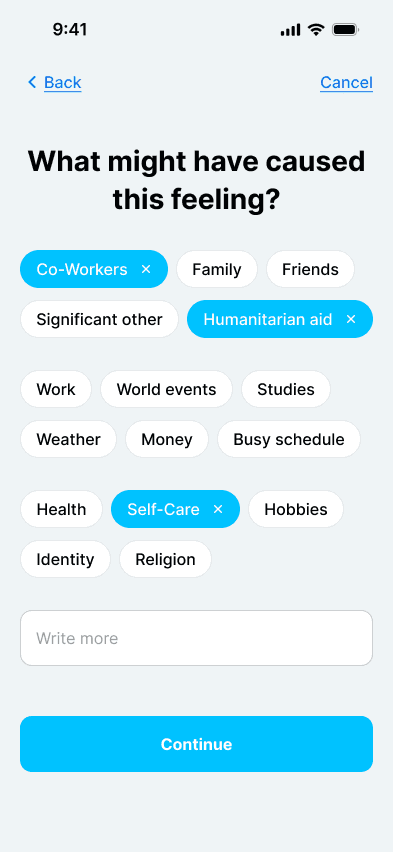
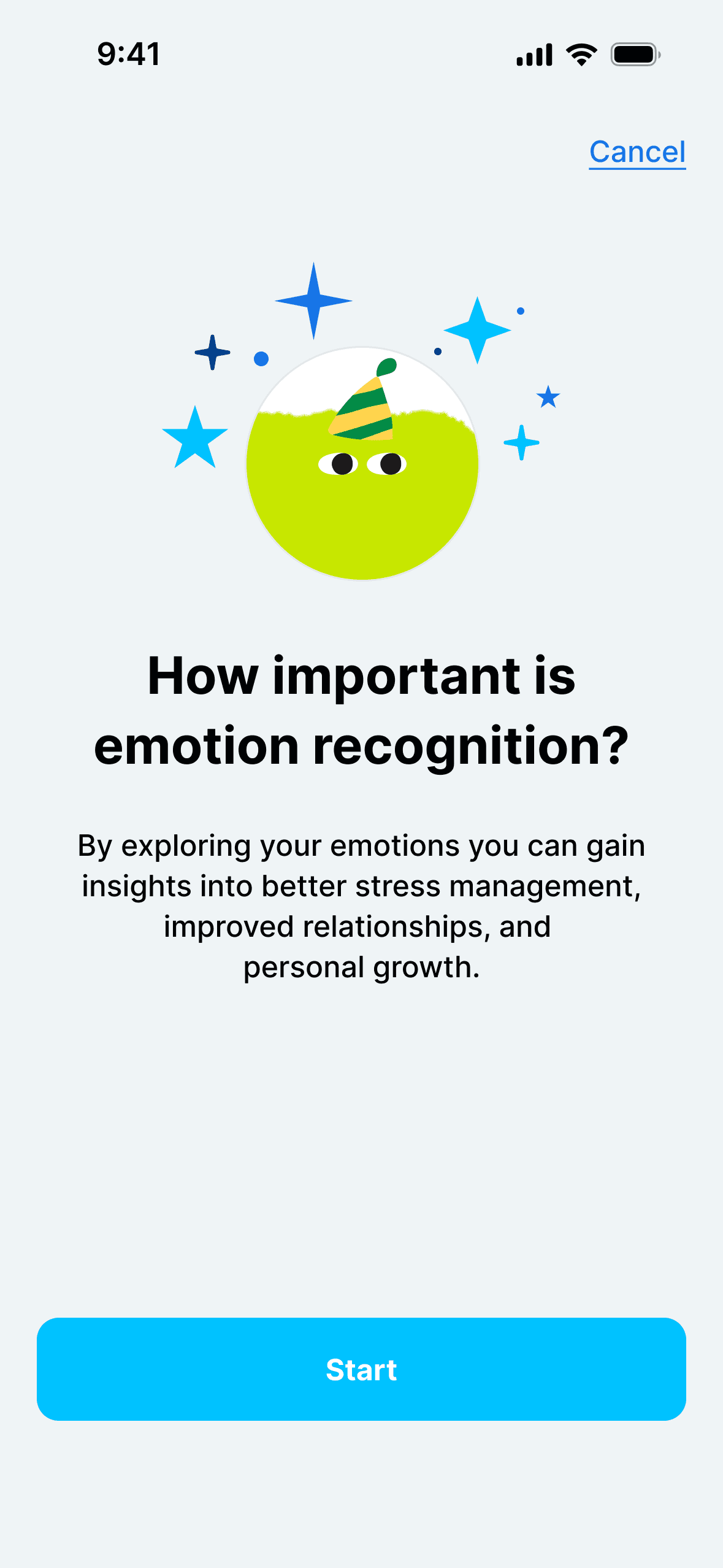
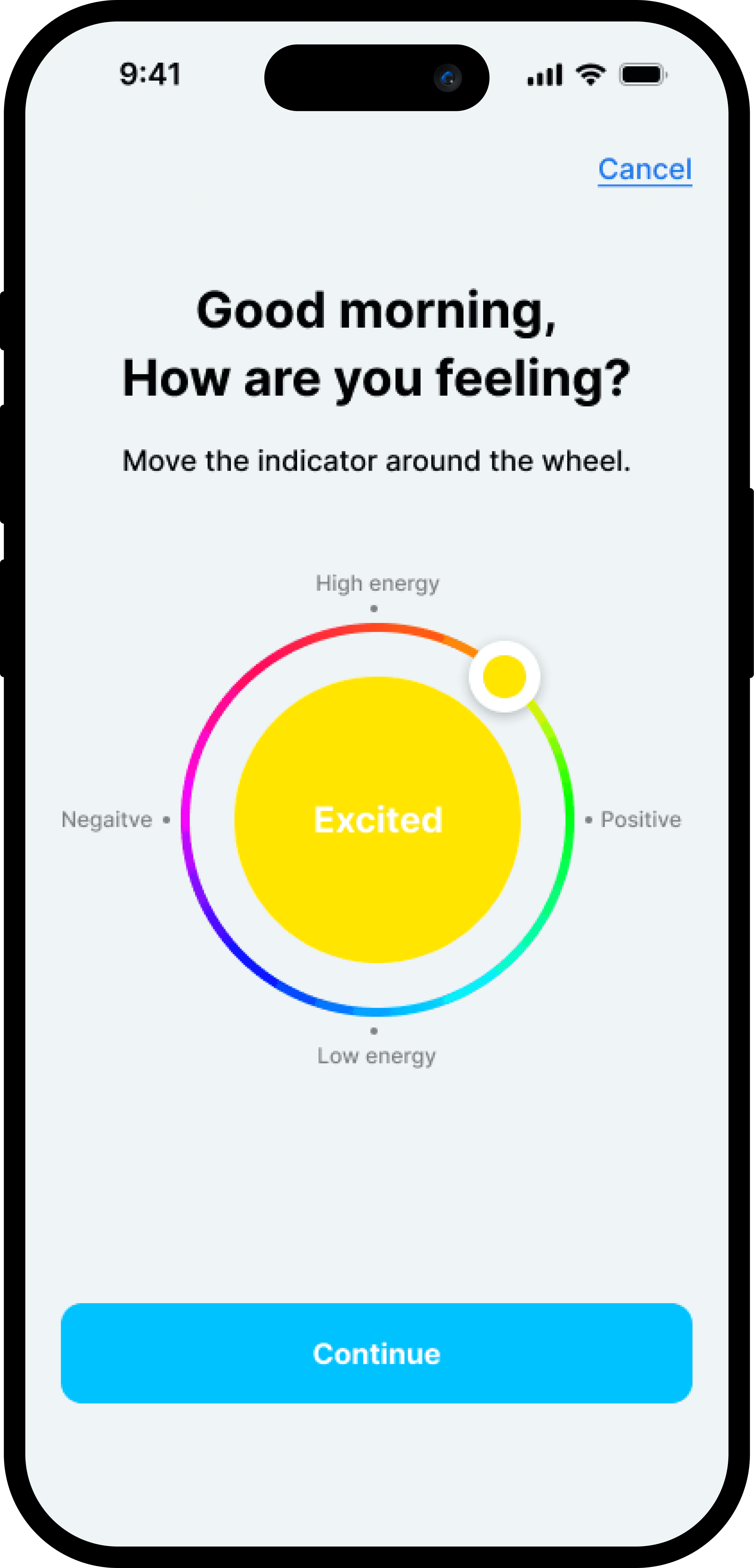
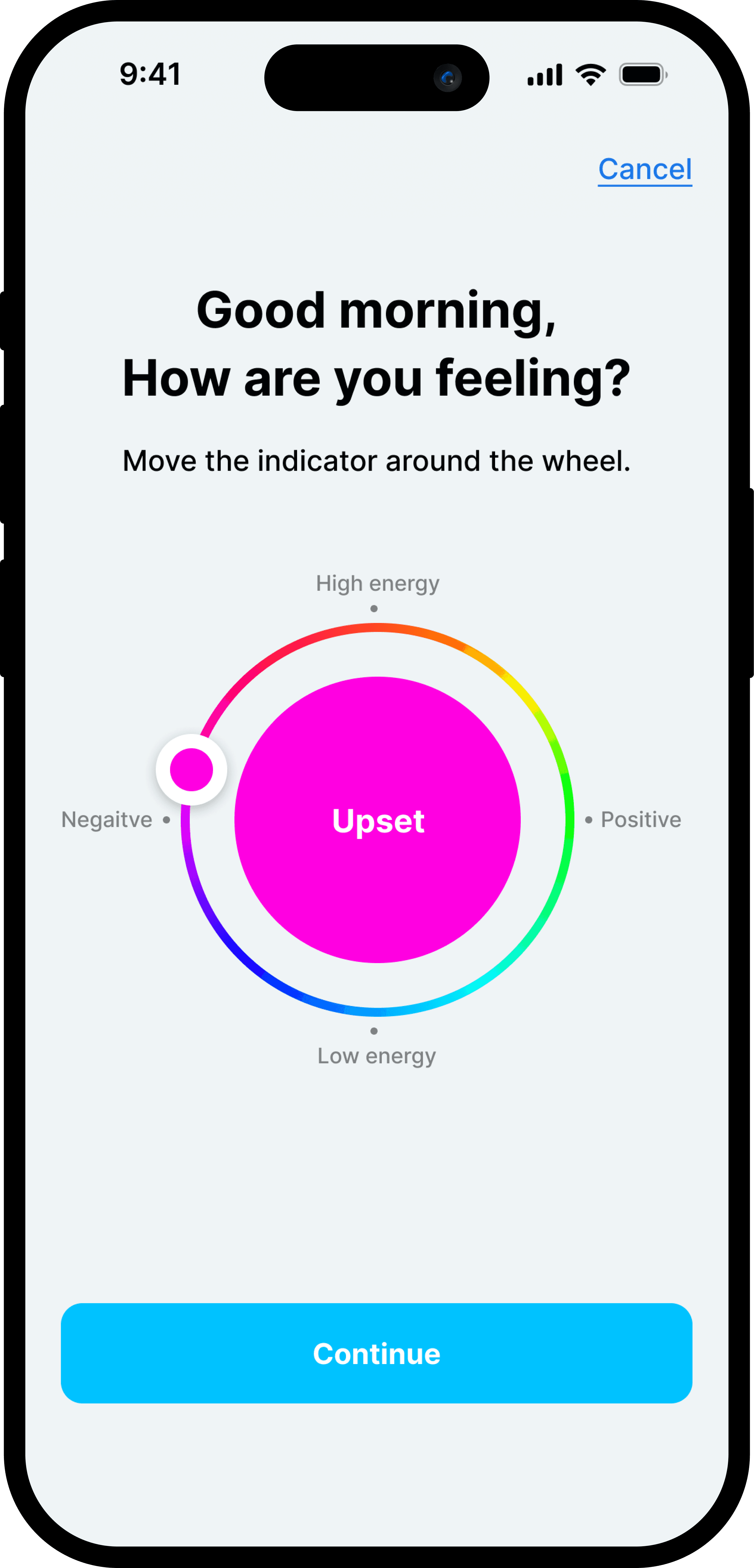
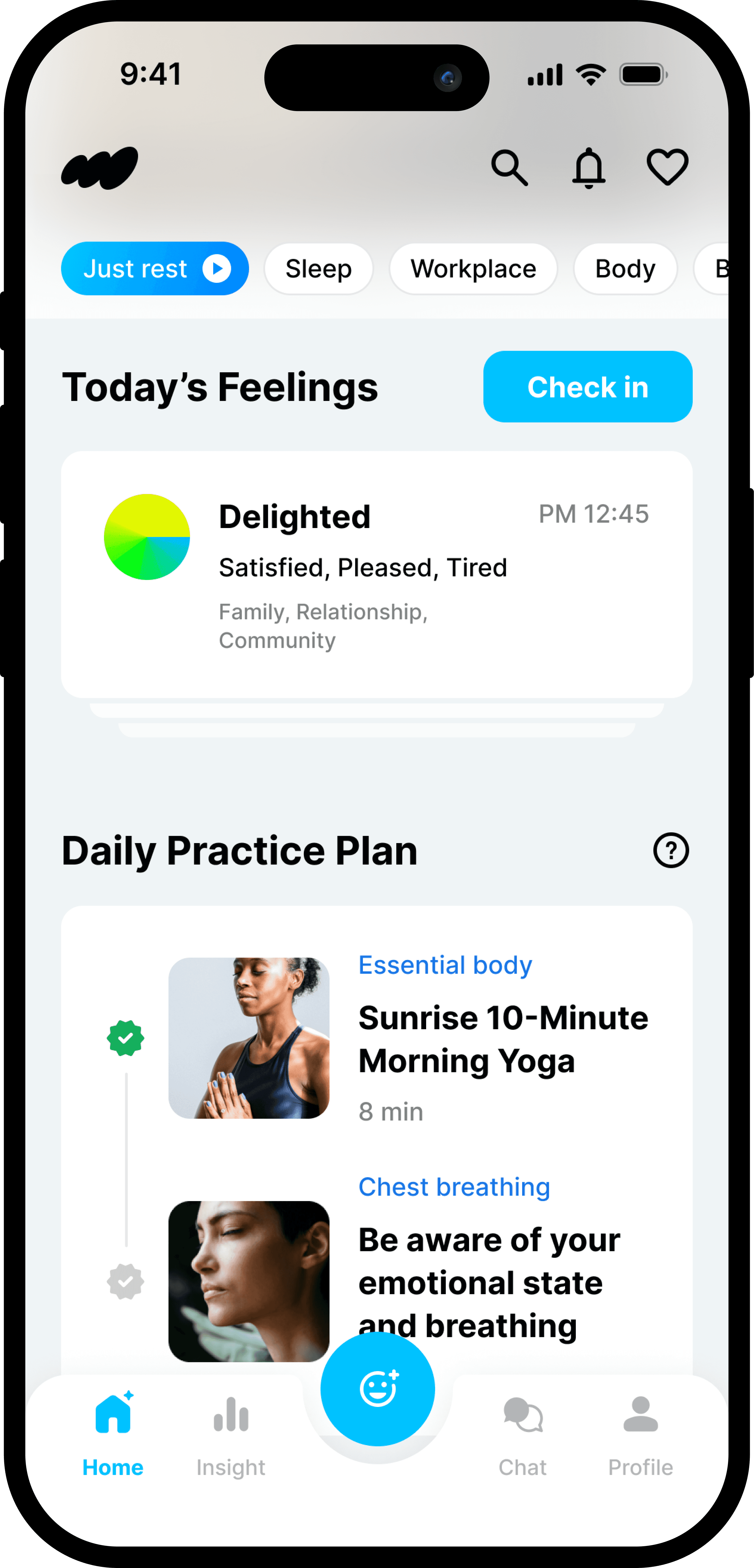
As a foundation for the rest of the app, the initial wireframes for the Emotion Tracking needed a redesign.
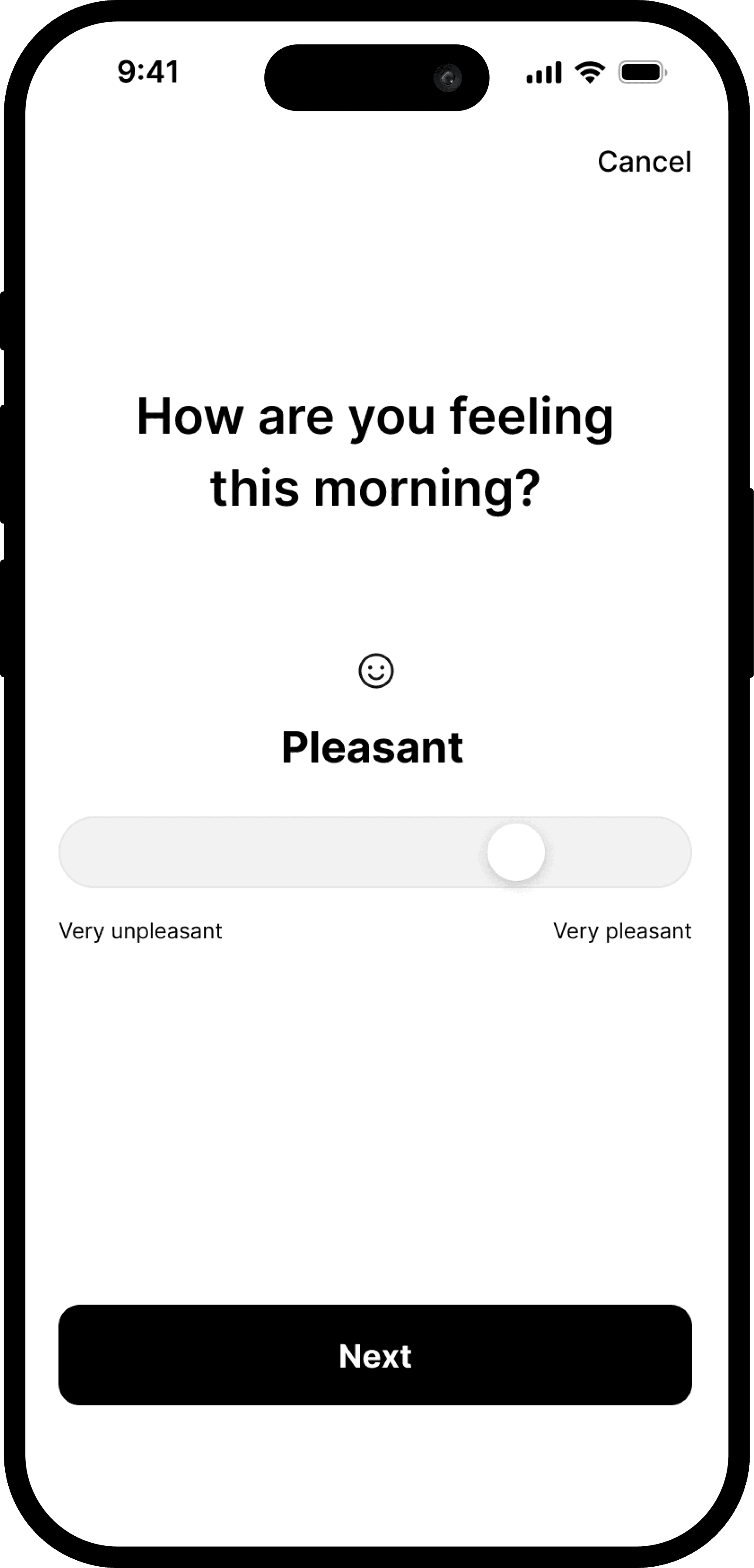
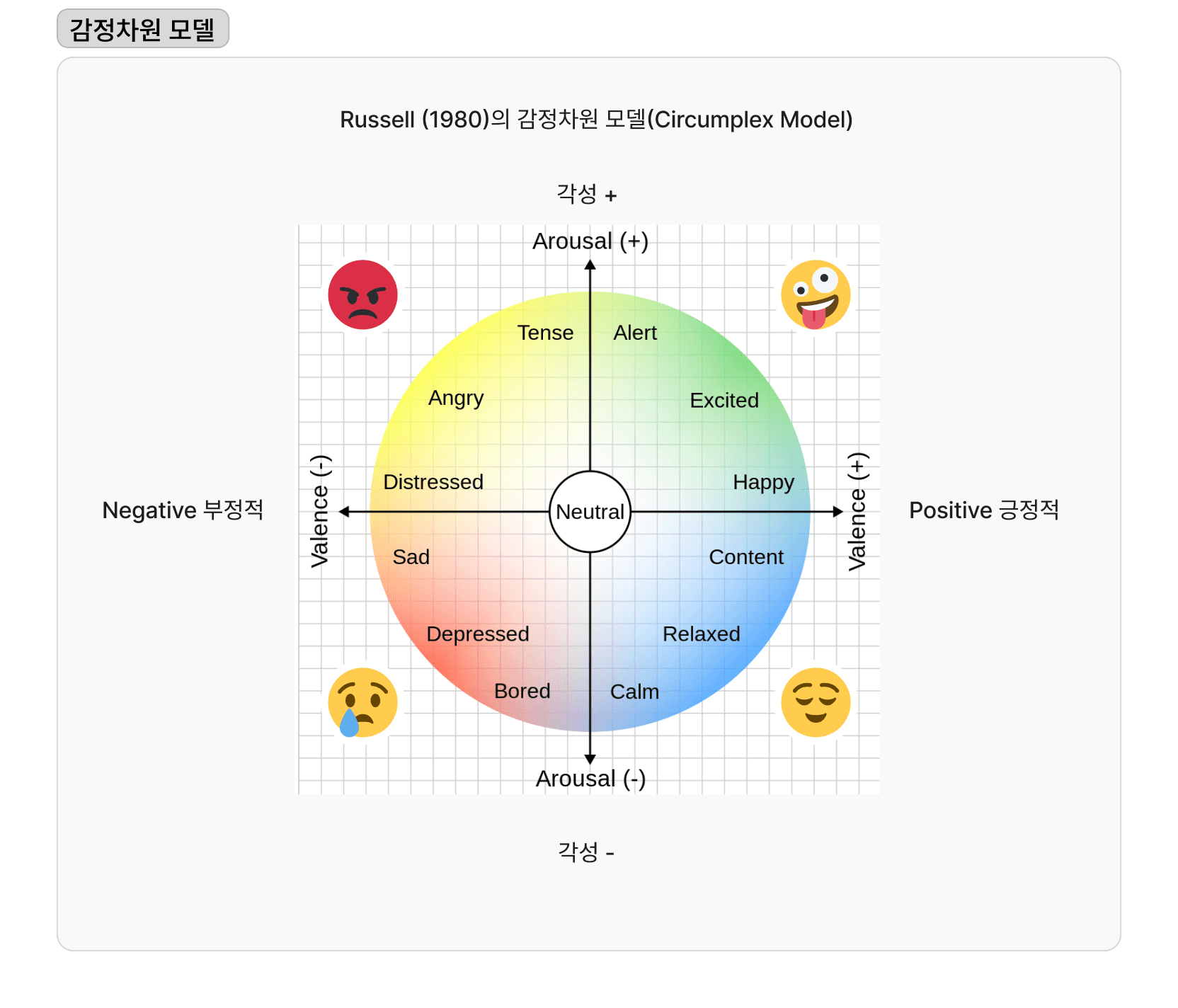
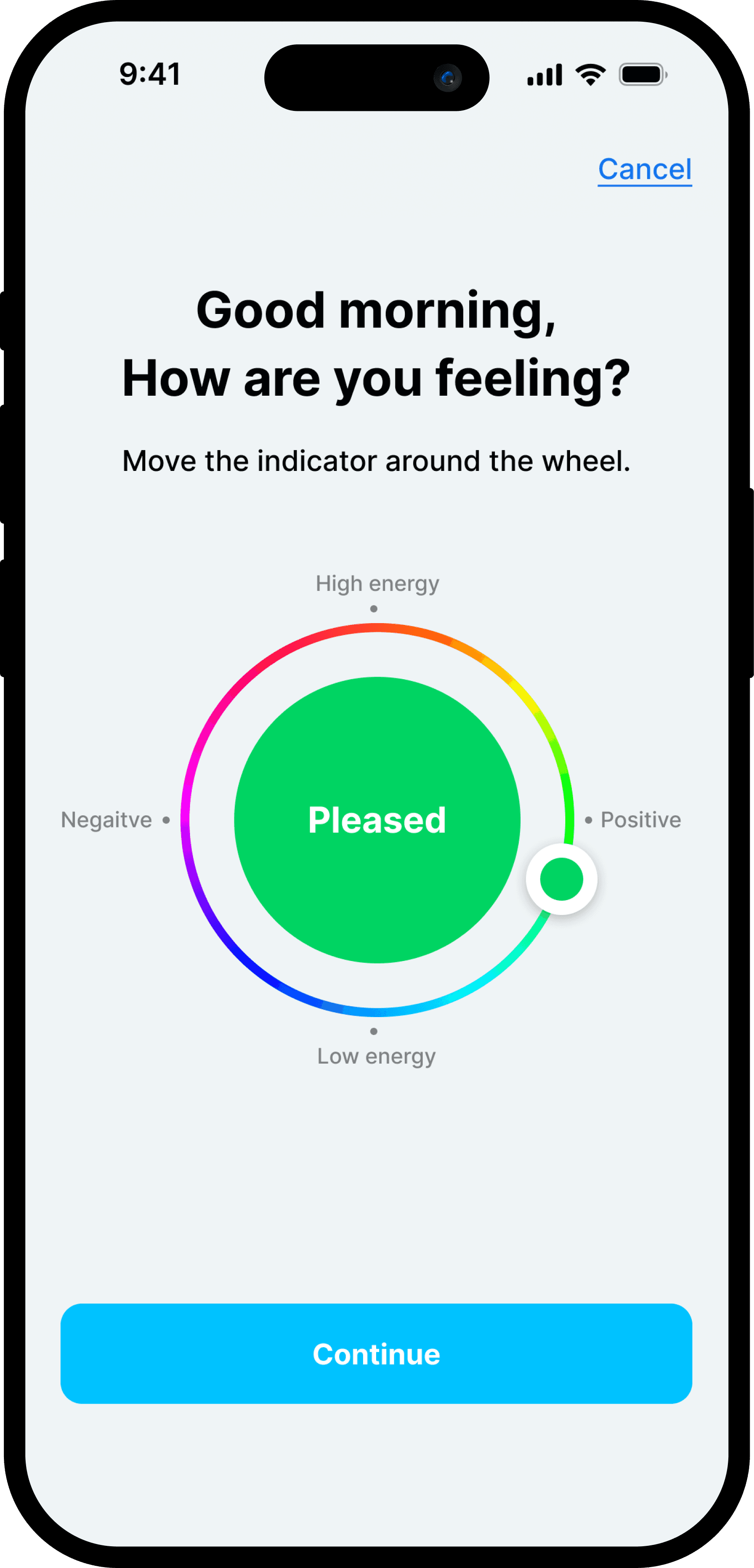
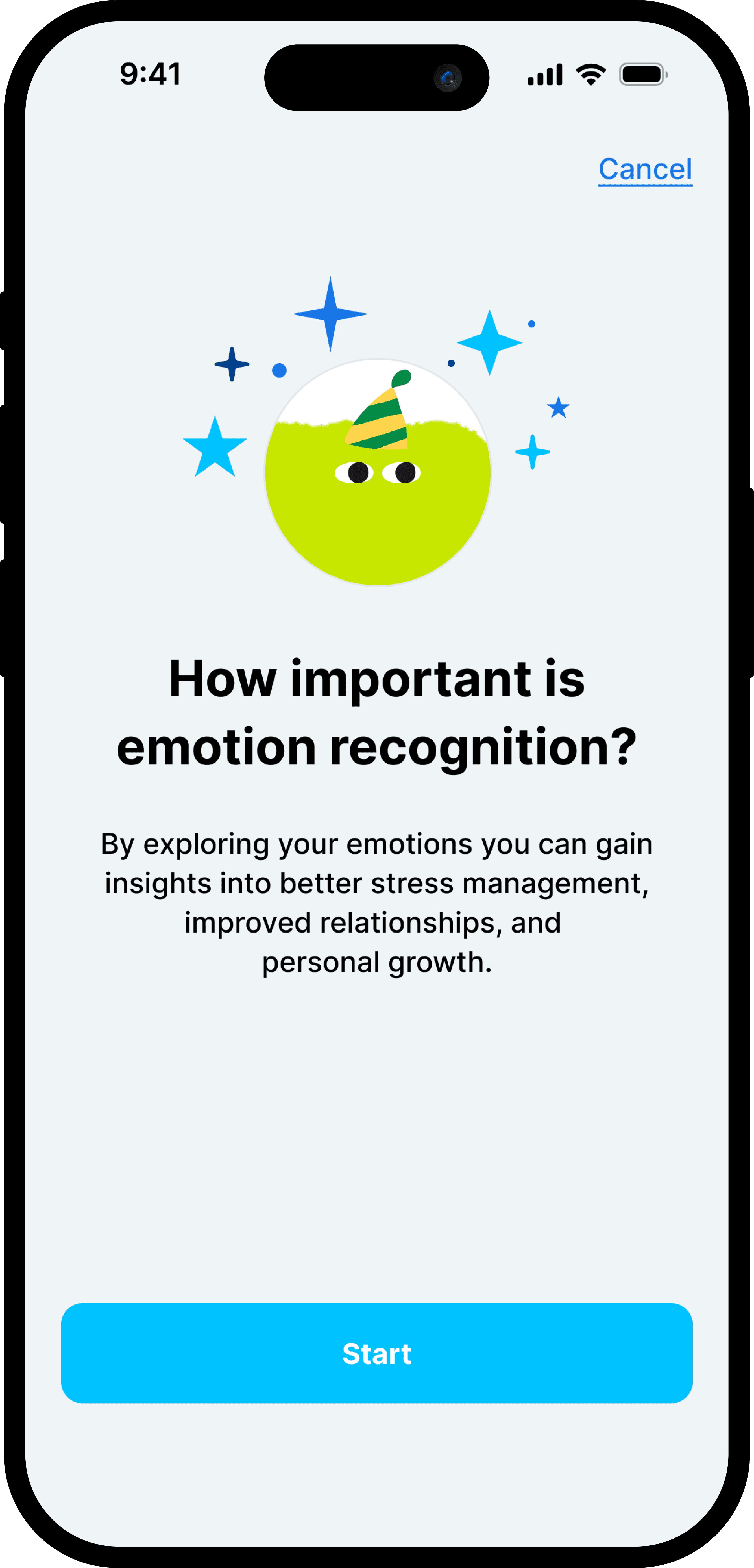
Intuitive Emotion Tracking UI
2.
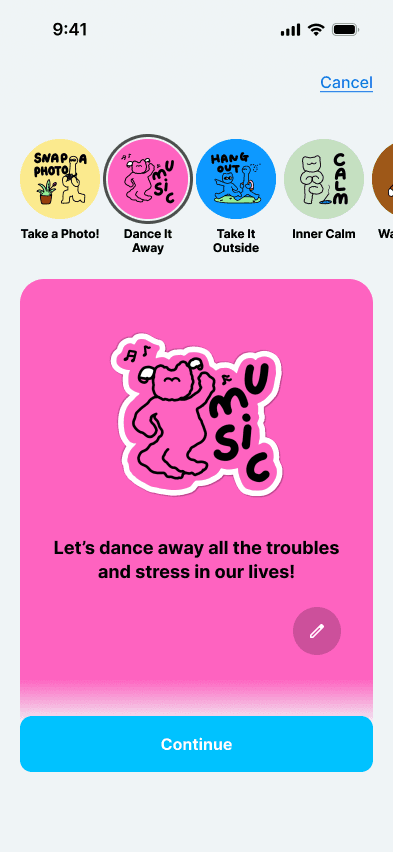
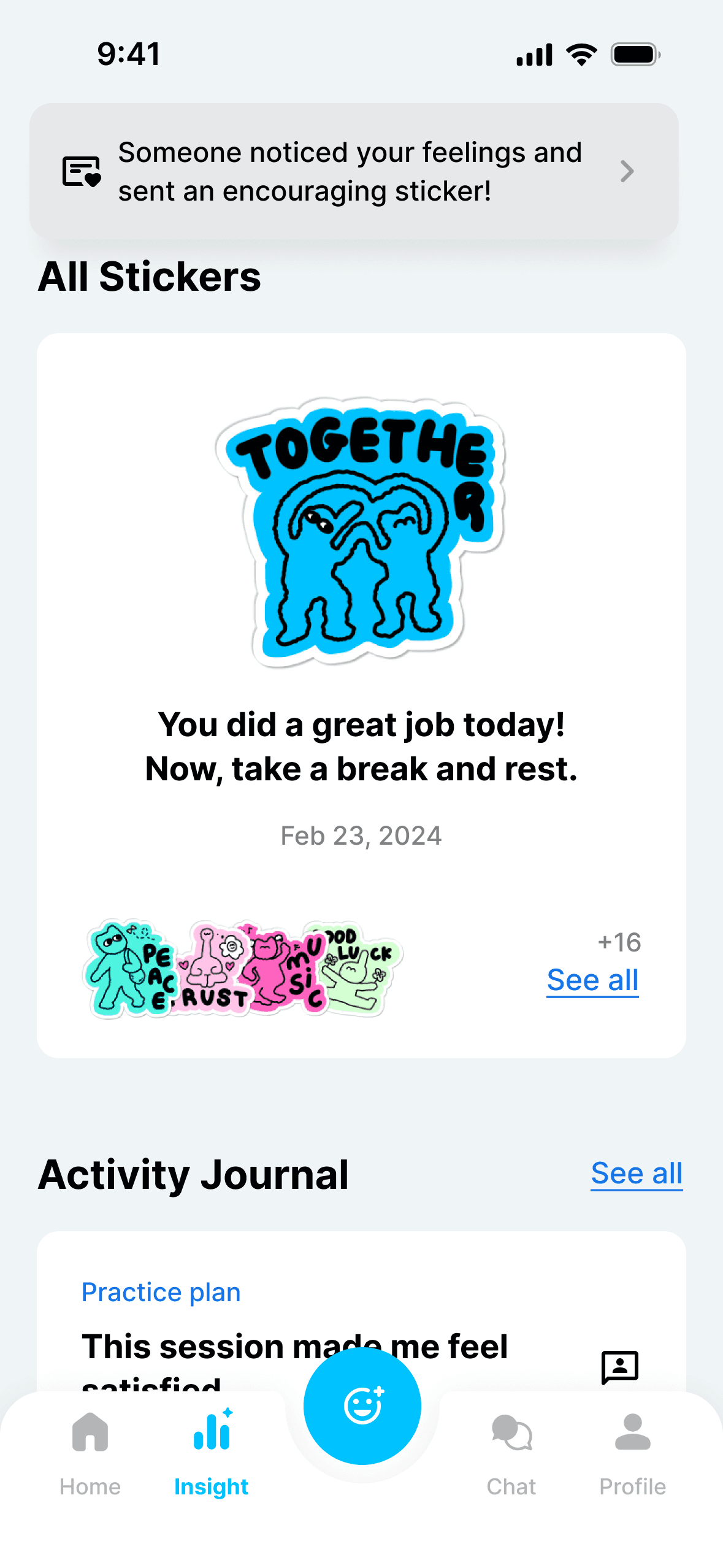
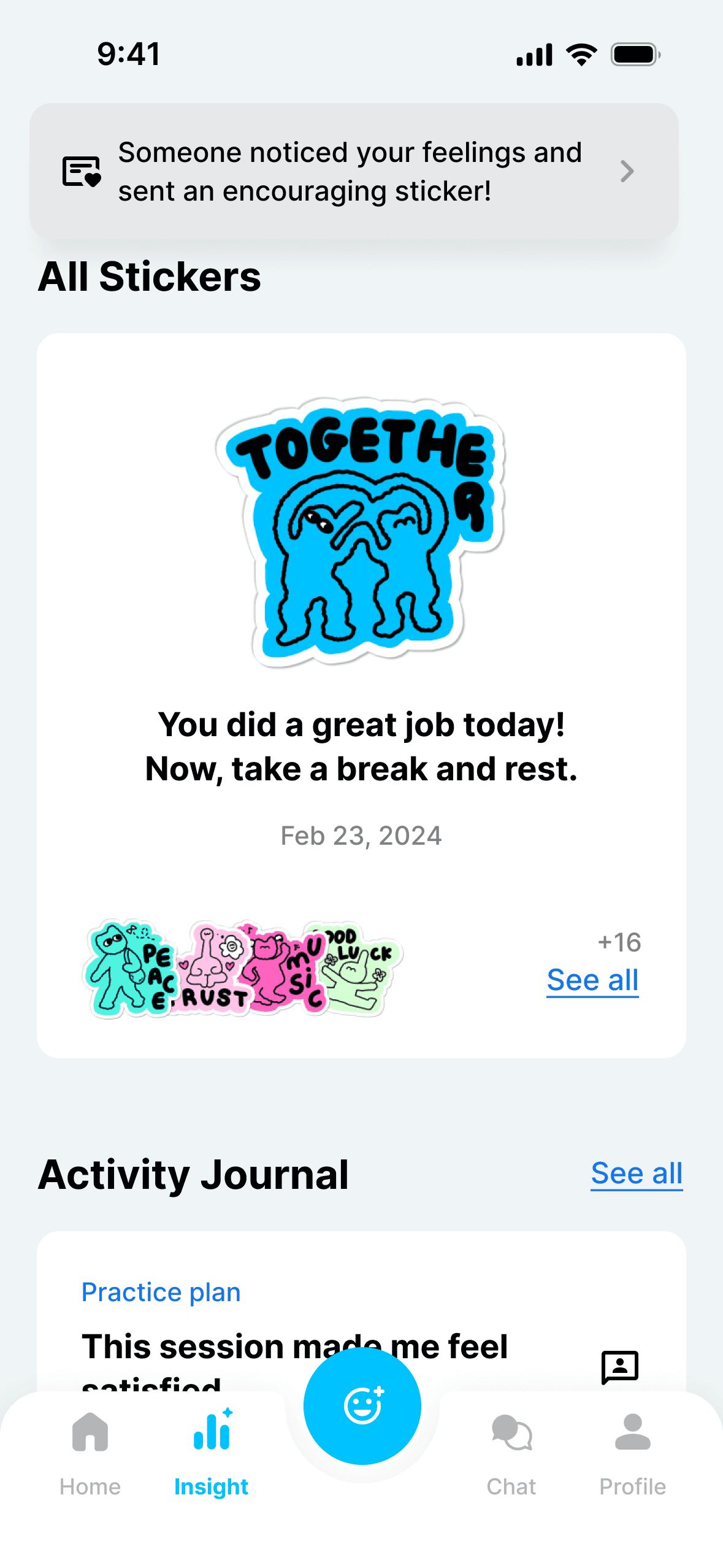
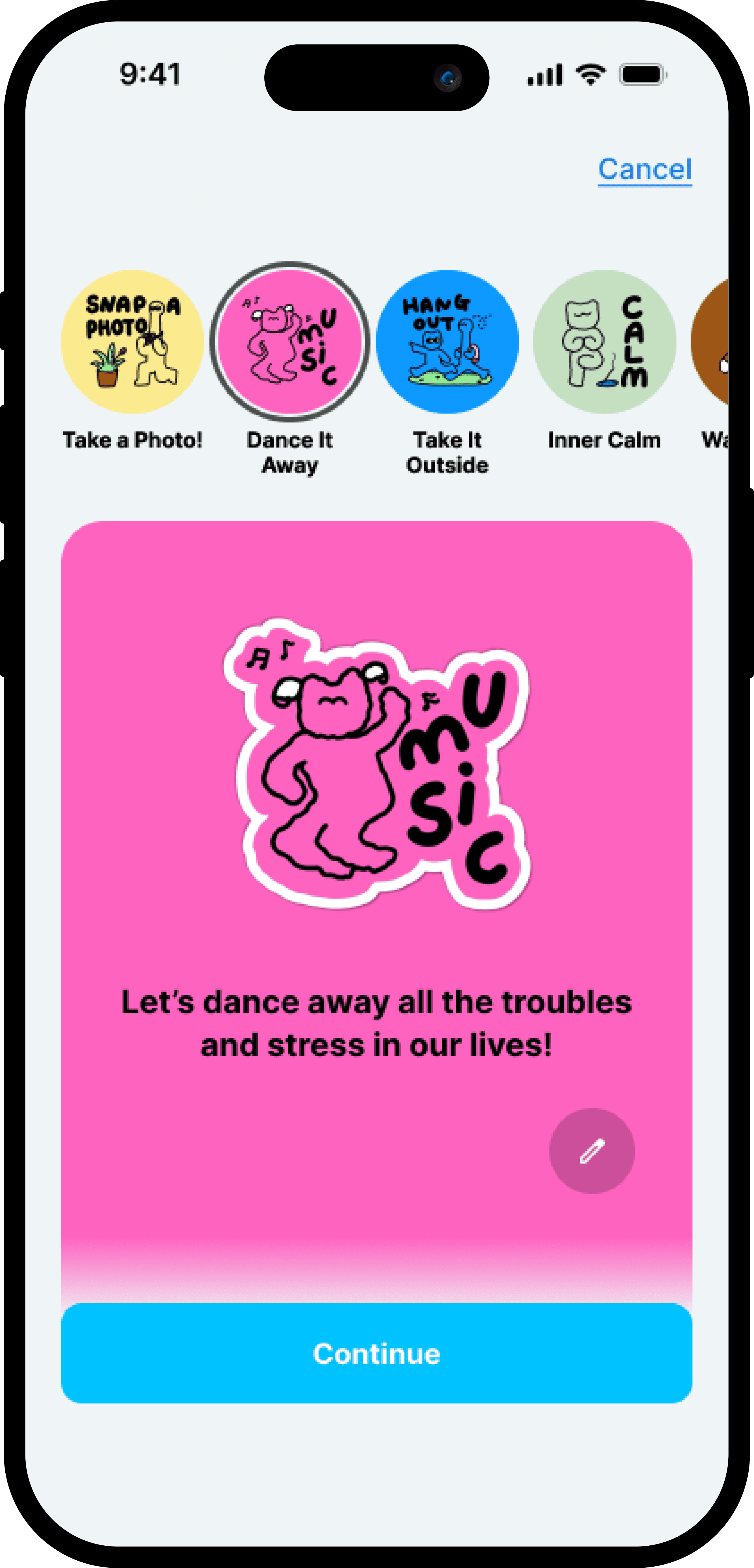
From gentle moments to low friction anonymous support feature
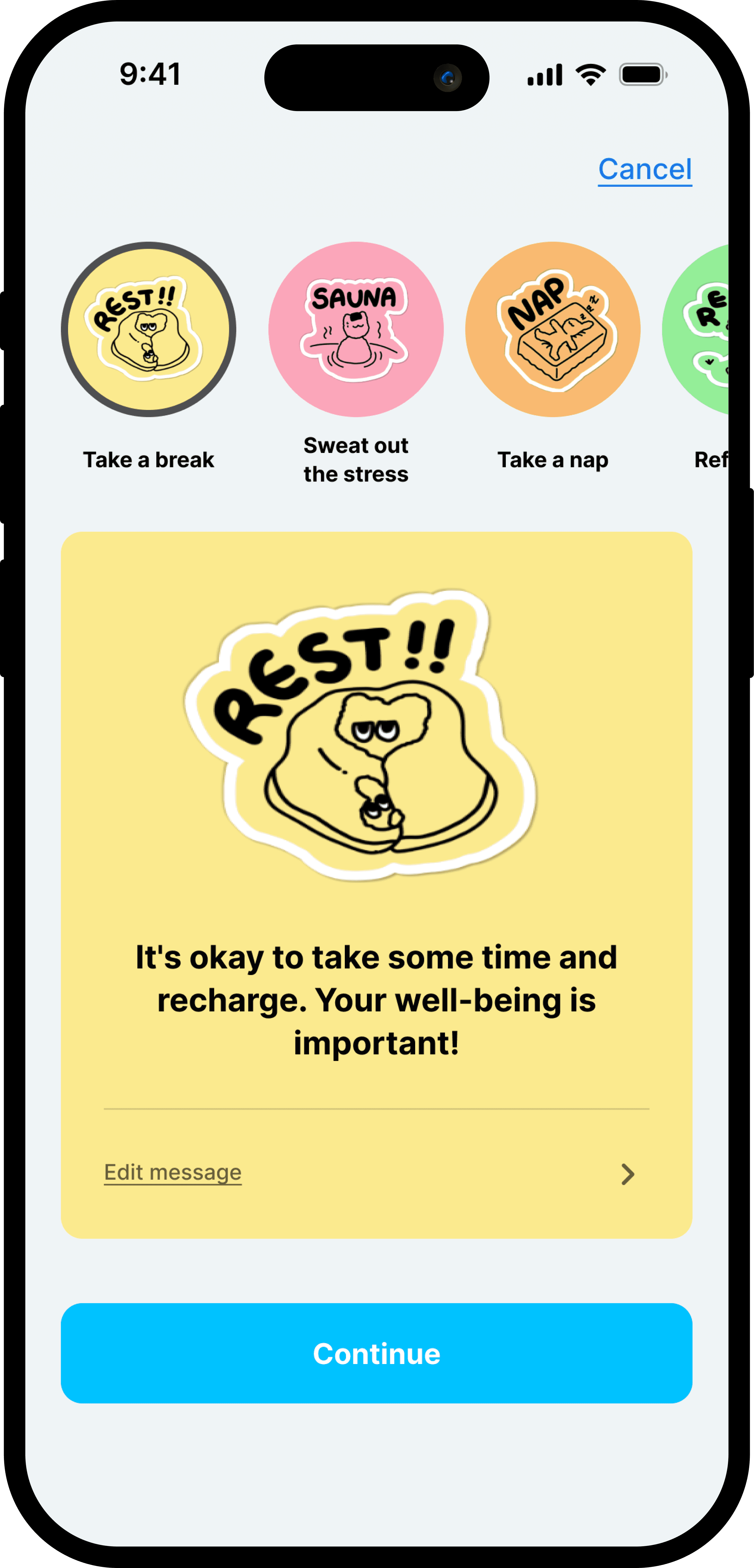
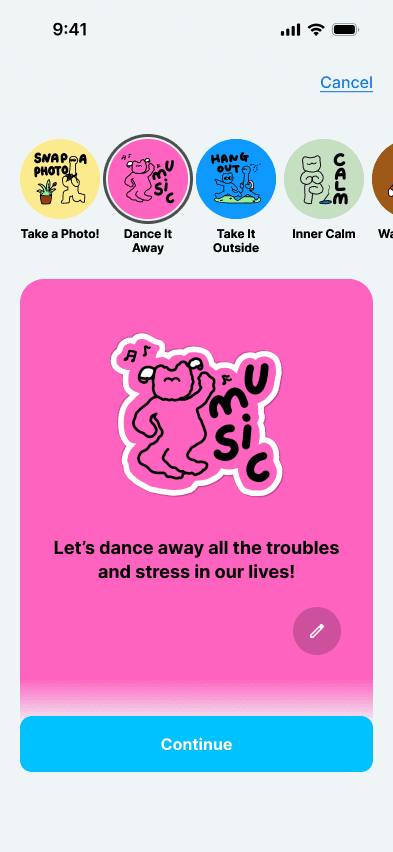
Stickers sharing wireframes
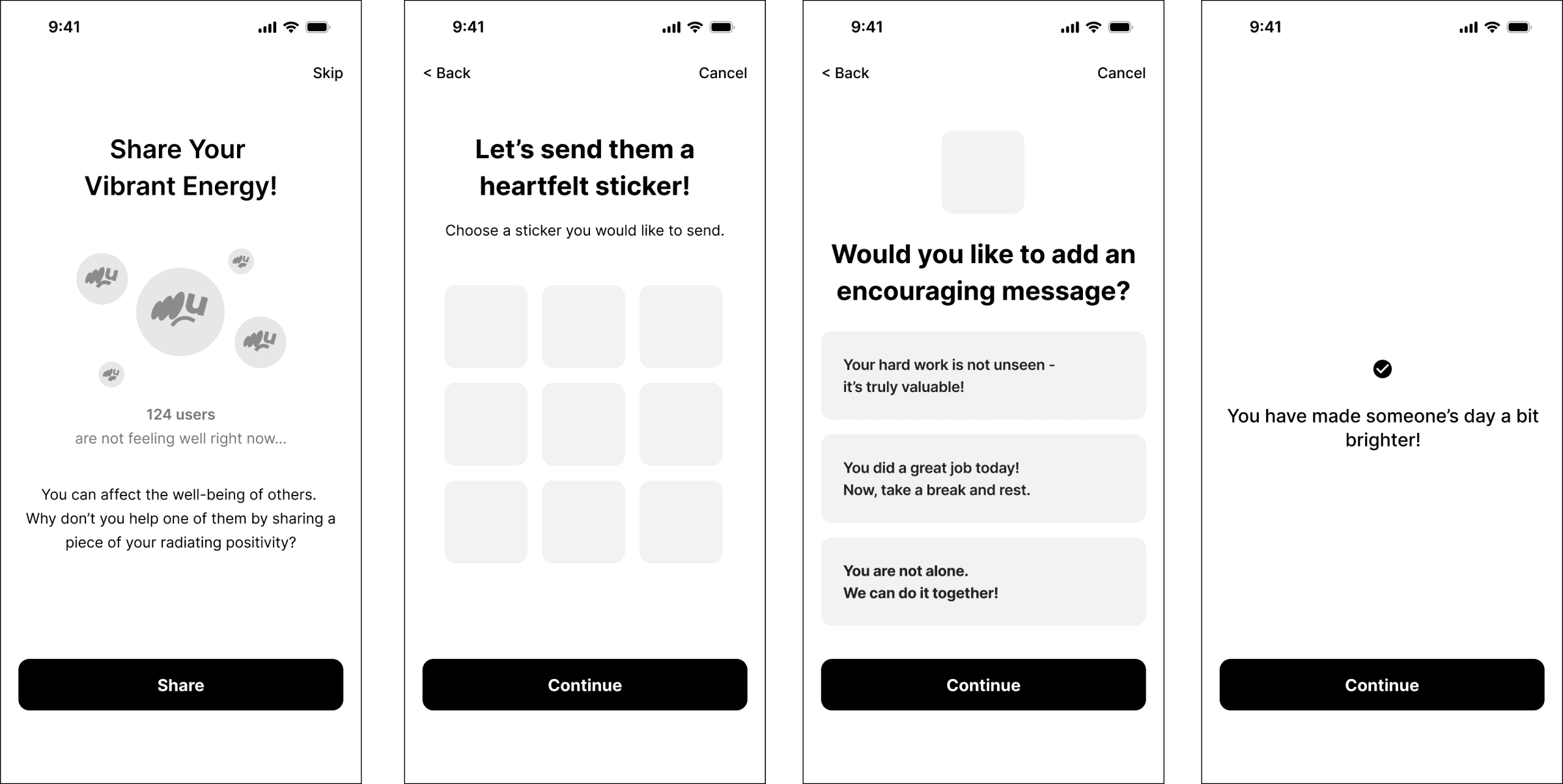
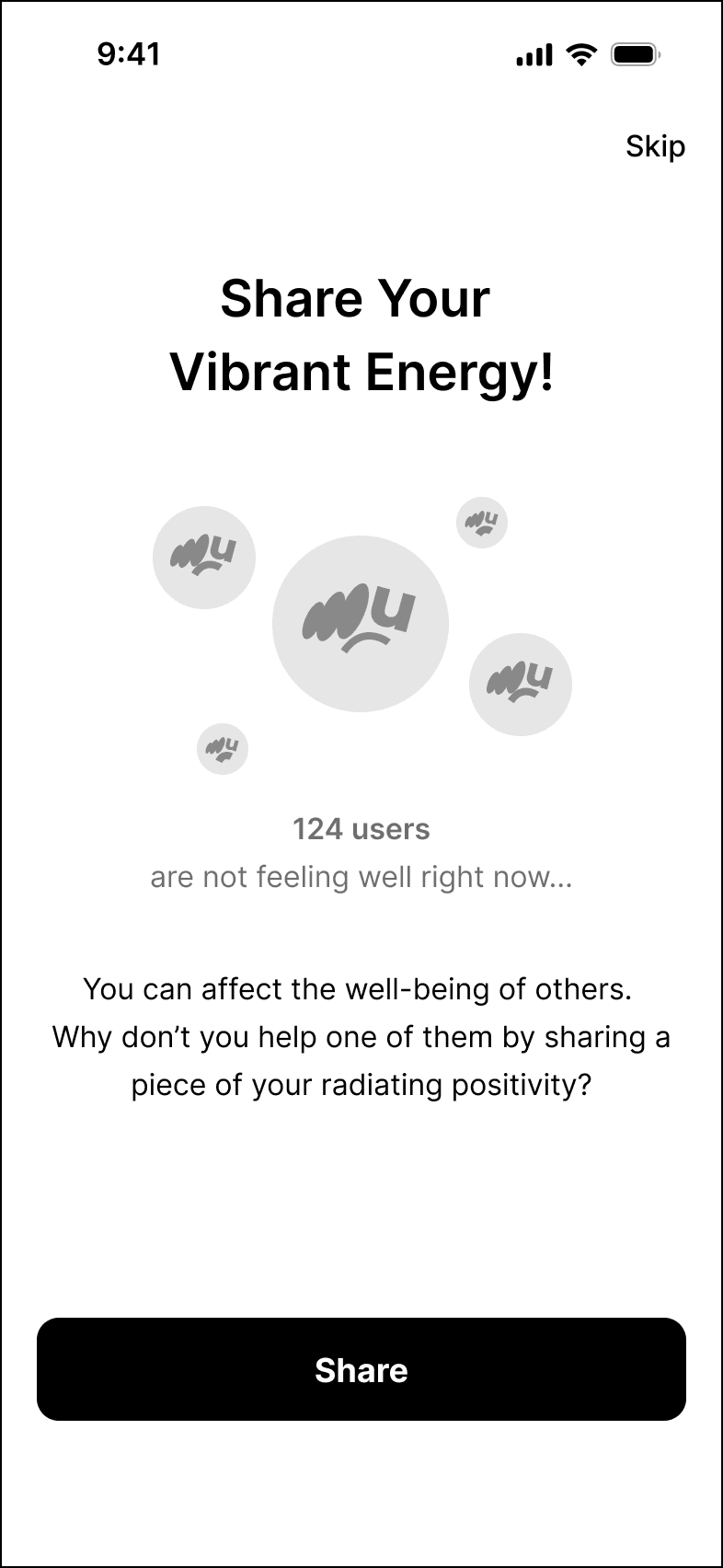
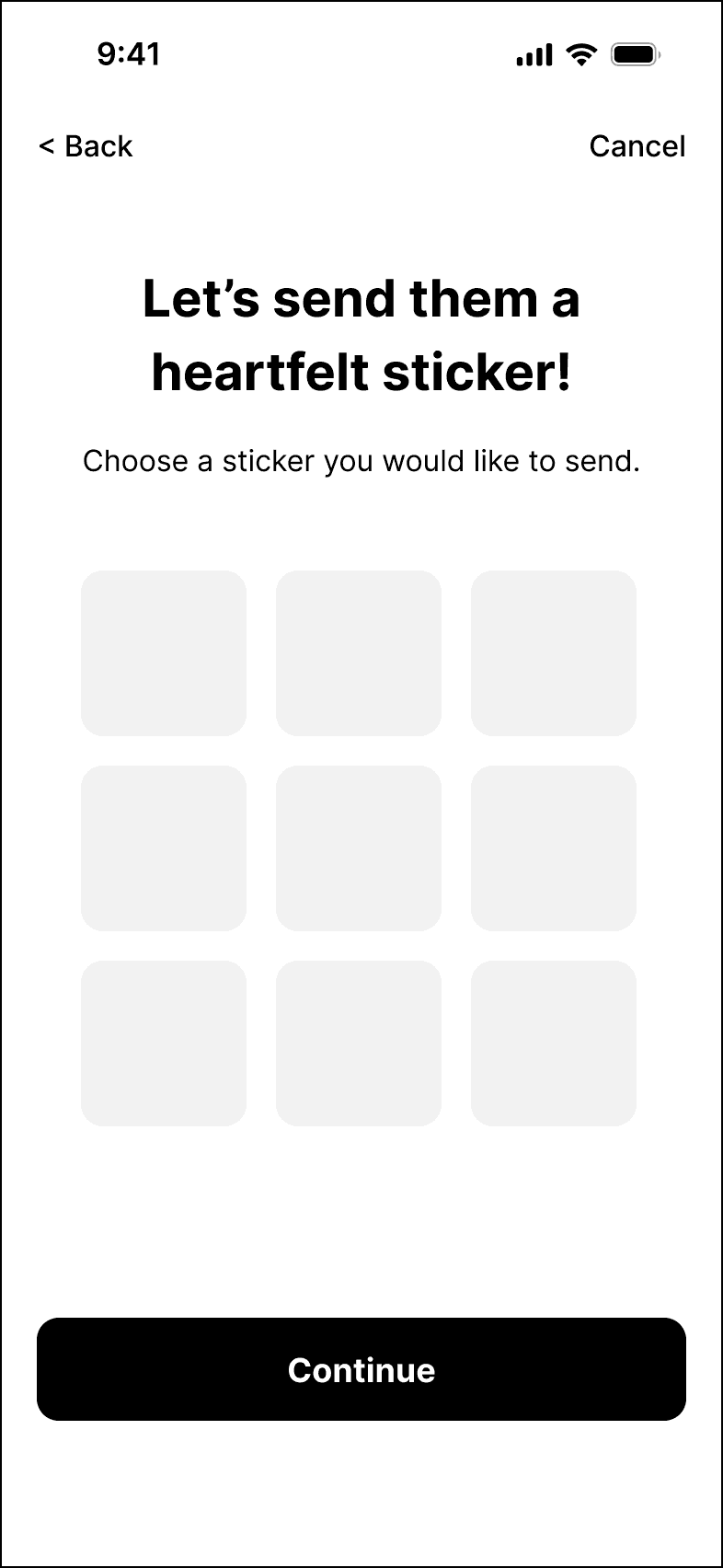
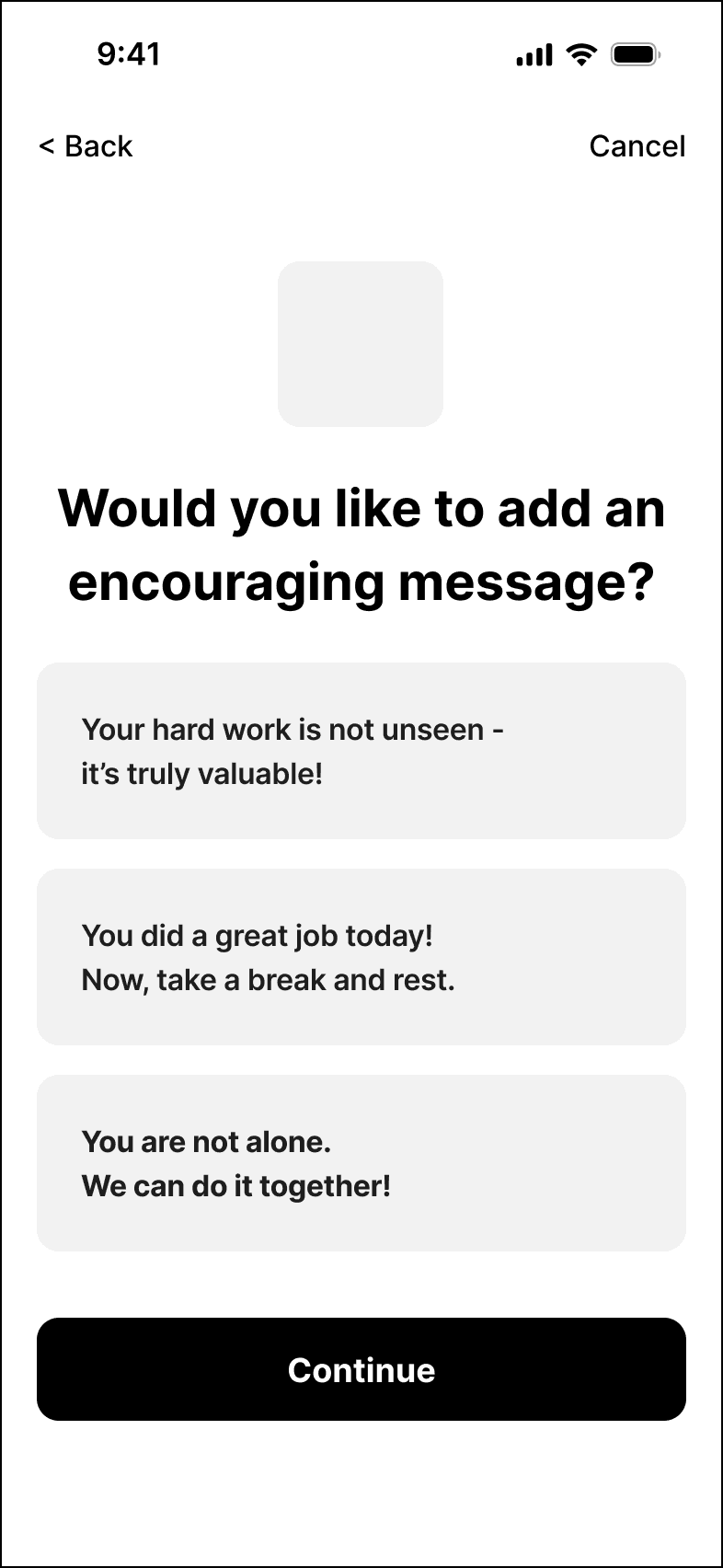
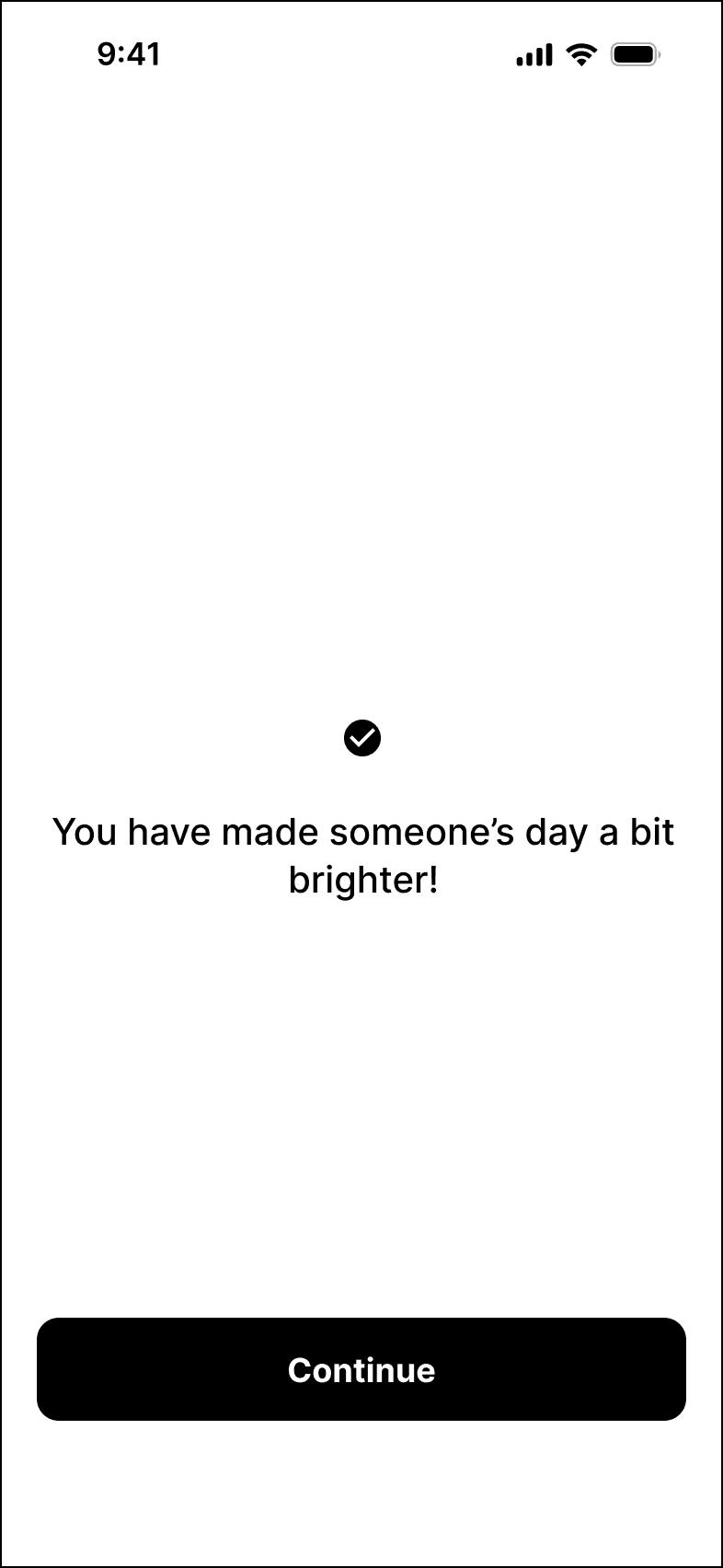
Exploring sticker sharing models
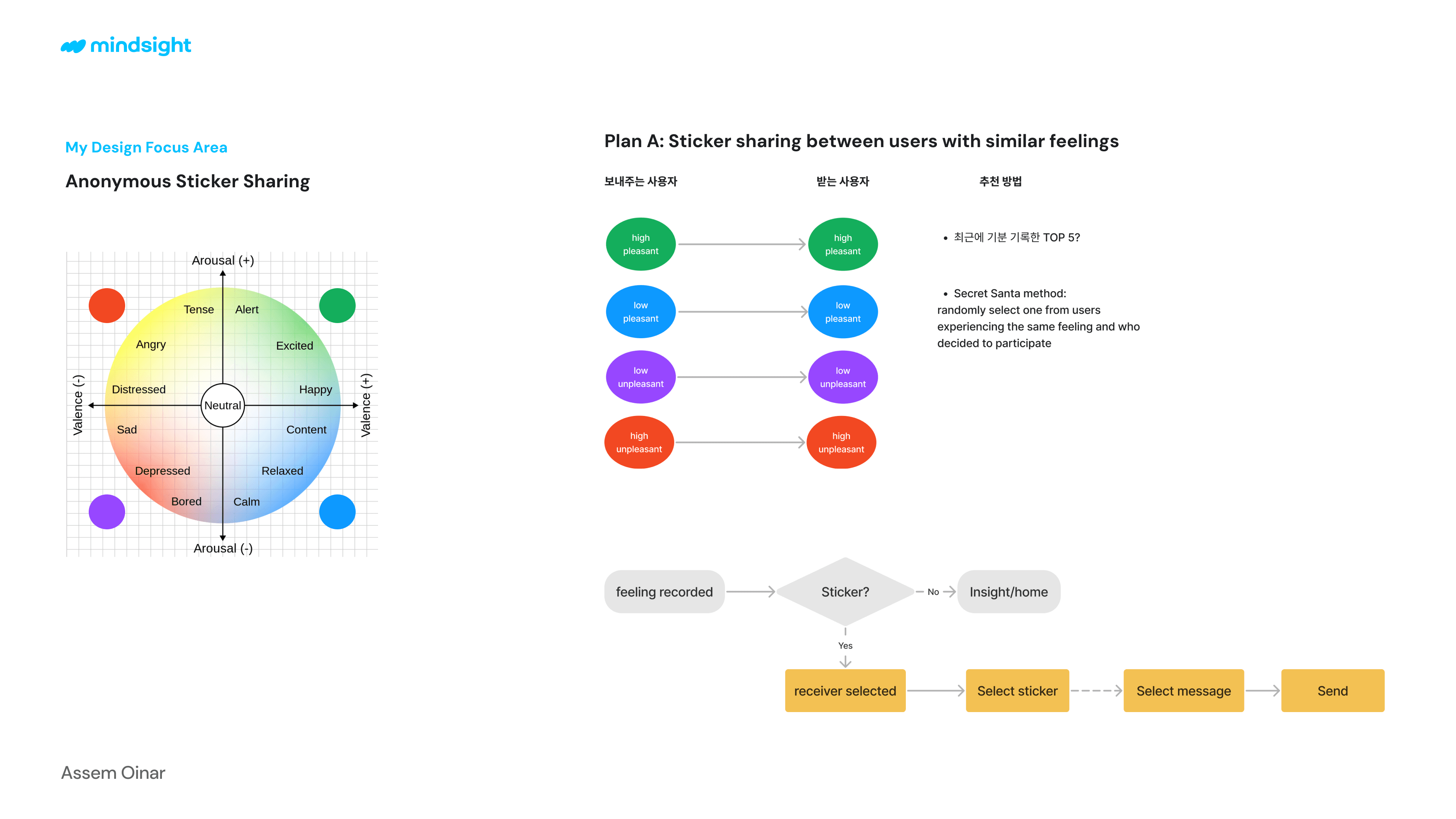
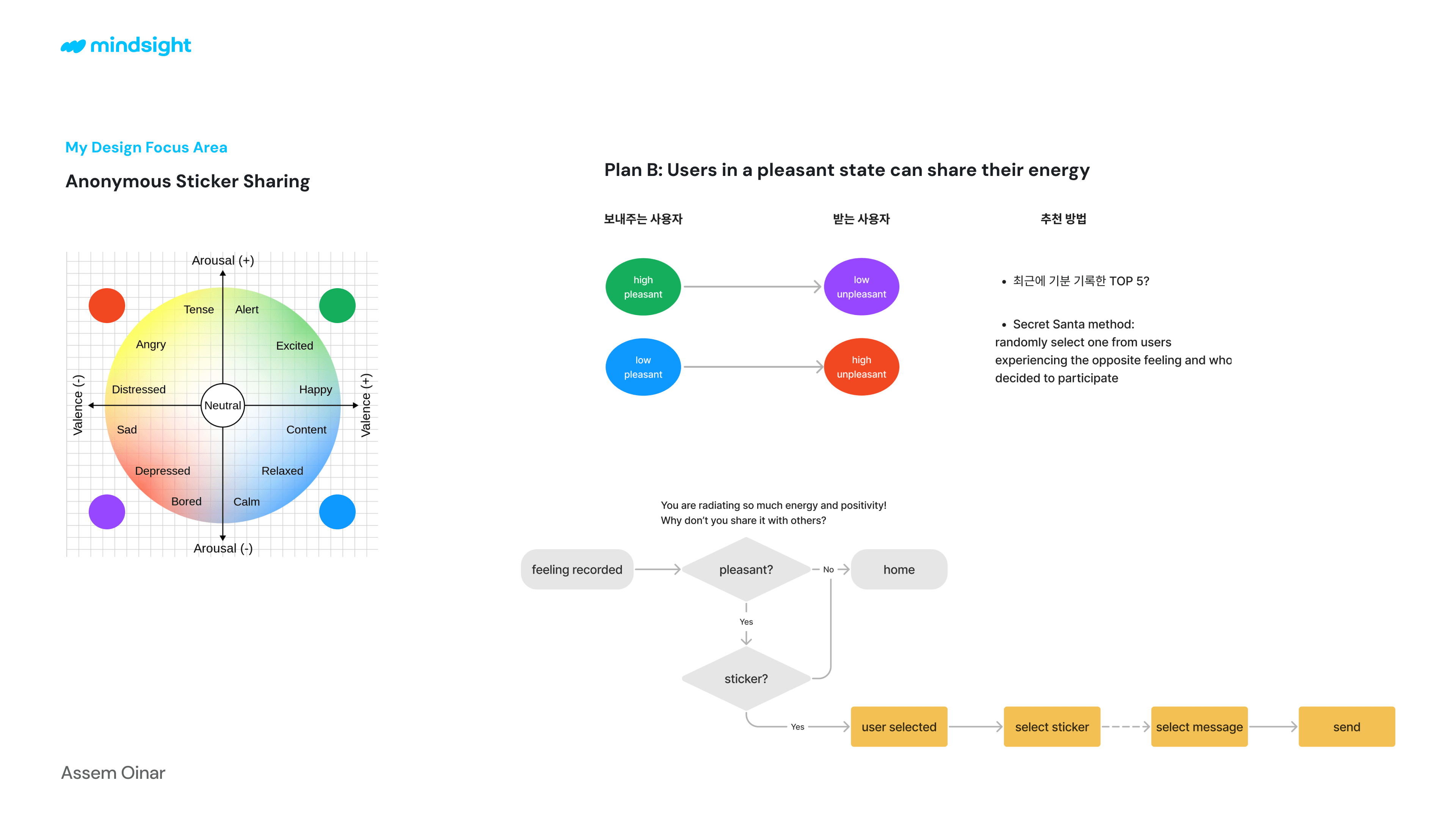
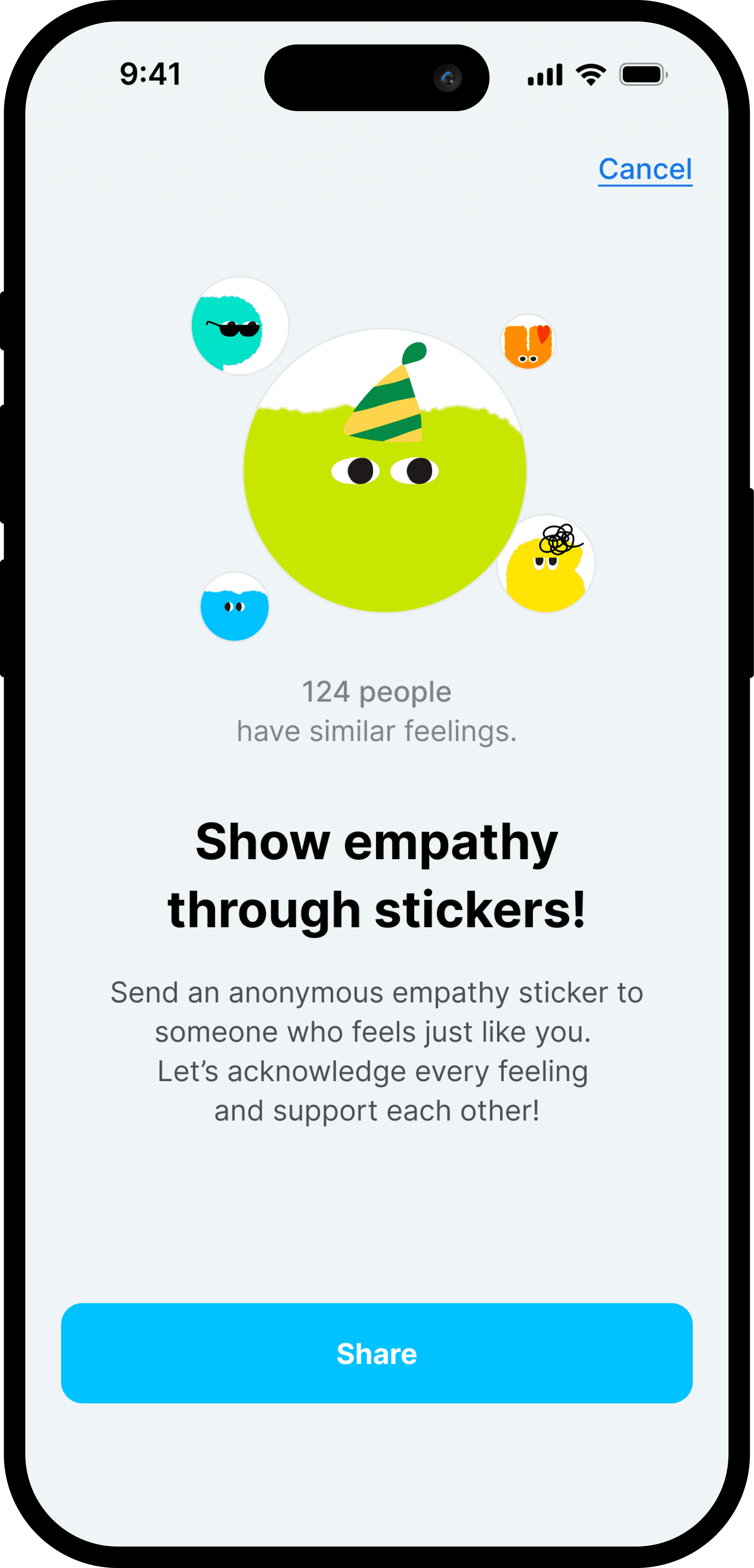
Two sticker-sharing models were explored:
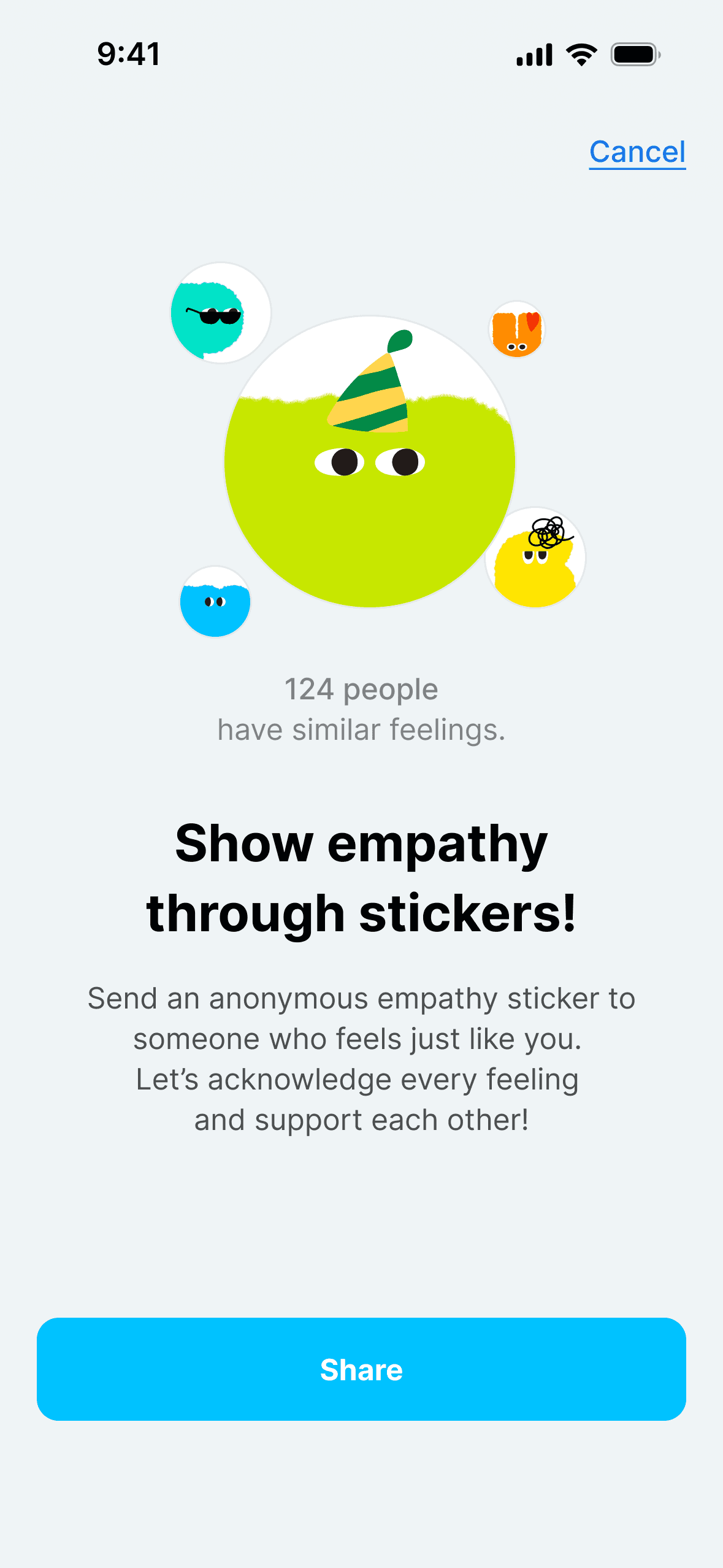
Model A — Similar Emotion Matching
Users are matched with others who logged similar feelings
Stickers are exchanged between users feeling the same way
Designed to create emotional resonance and a sense of “I’m not alone”
Model B — Opposite Emotion Matching
Users are matched with others in a more positive emotional state
Stickers flow from emotionally stable users to those feeling low
Designed to simulate gentle encouragement and emotional uplift
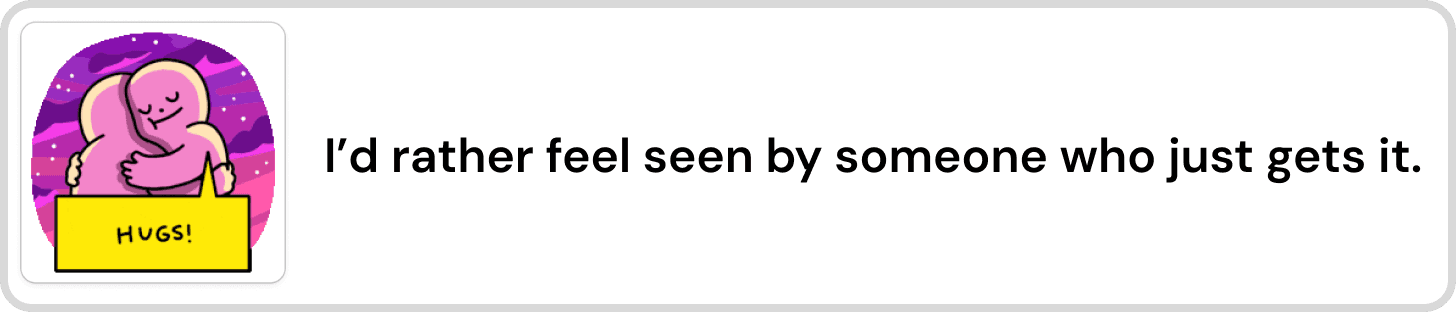
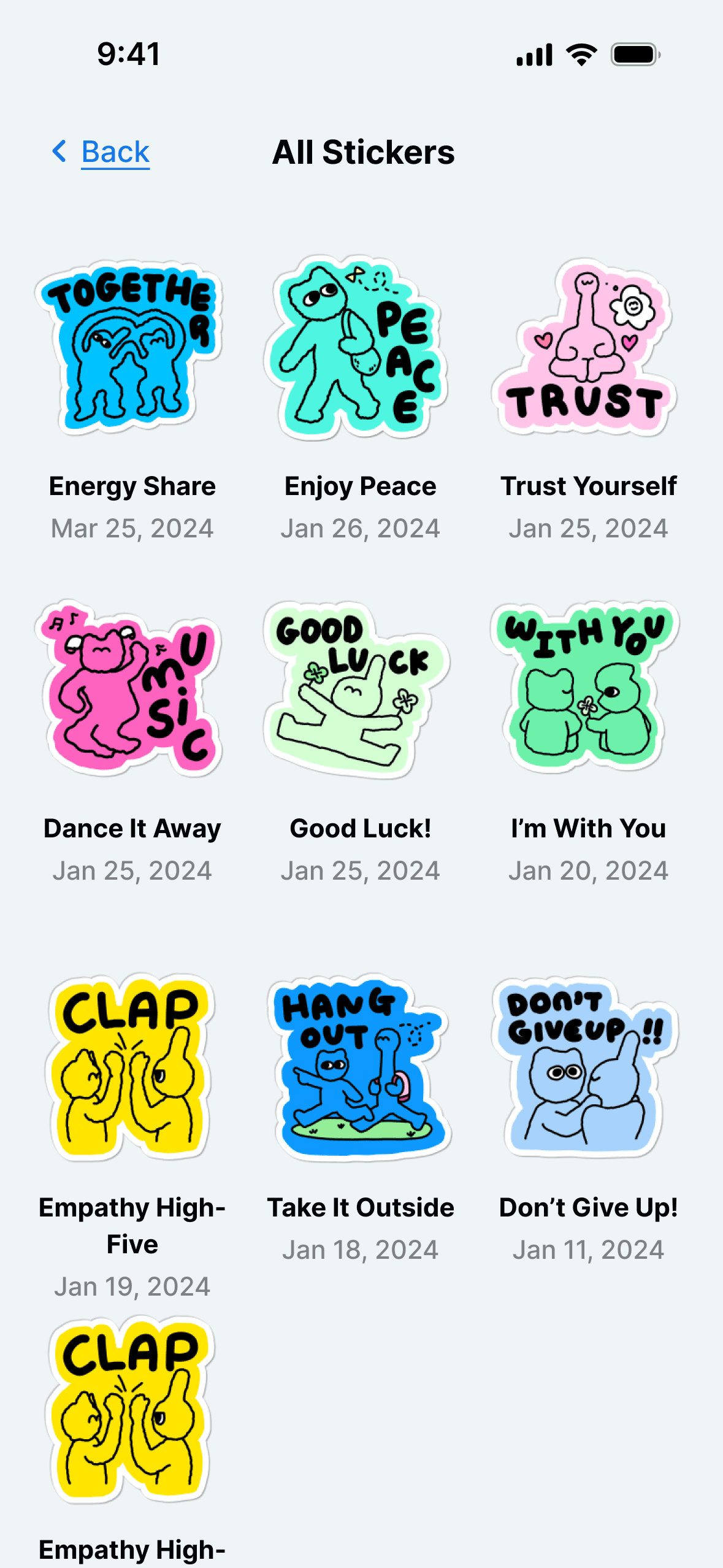
Anonymous Empathy Stickers UI
3.
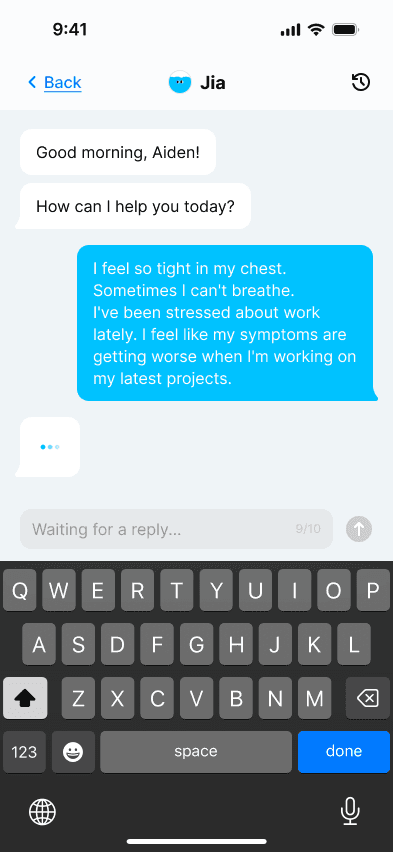
AI-Based Expert Guidance
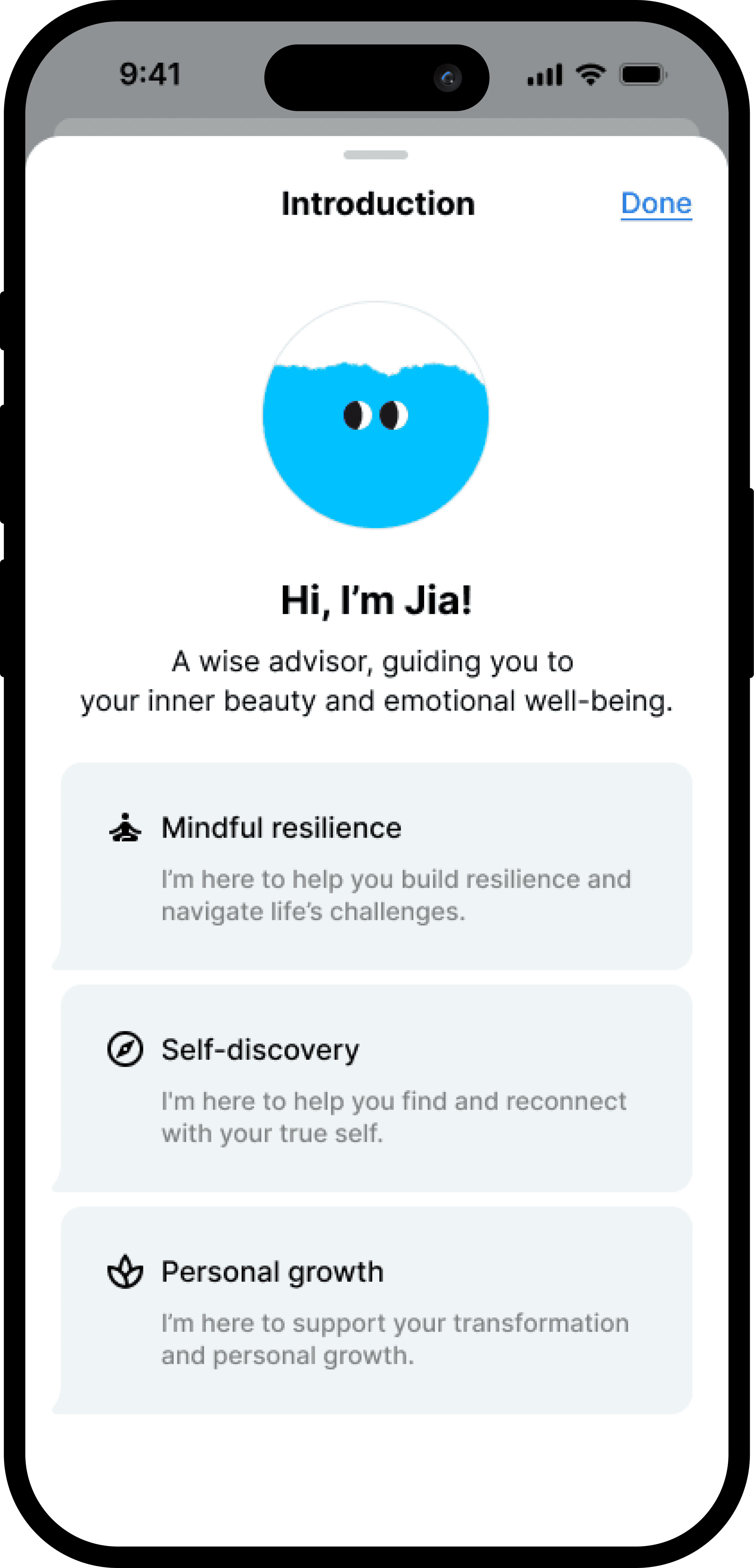
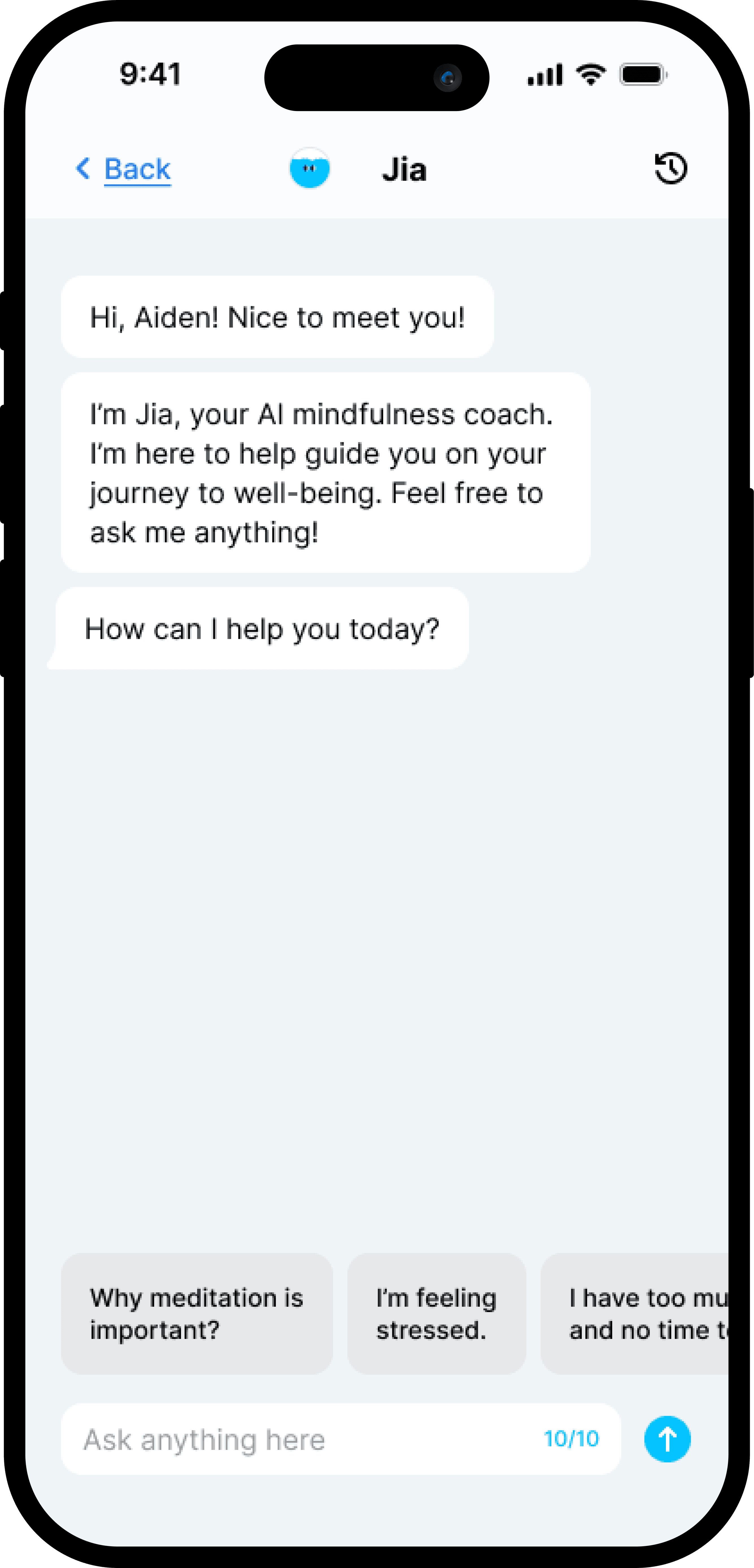
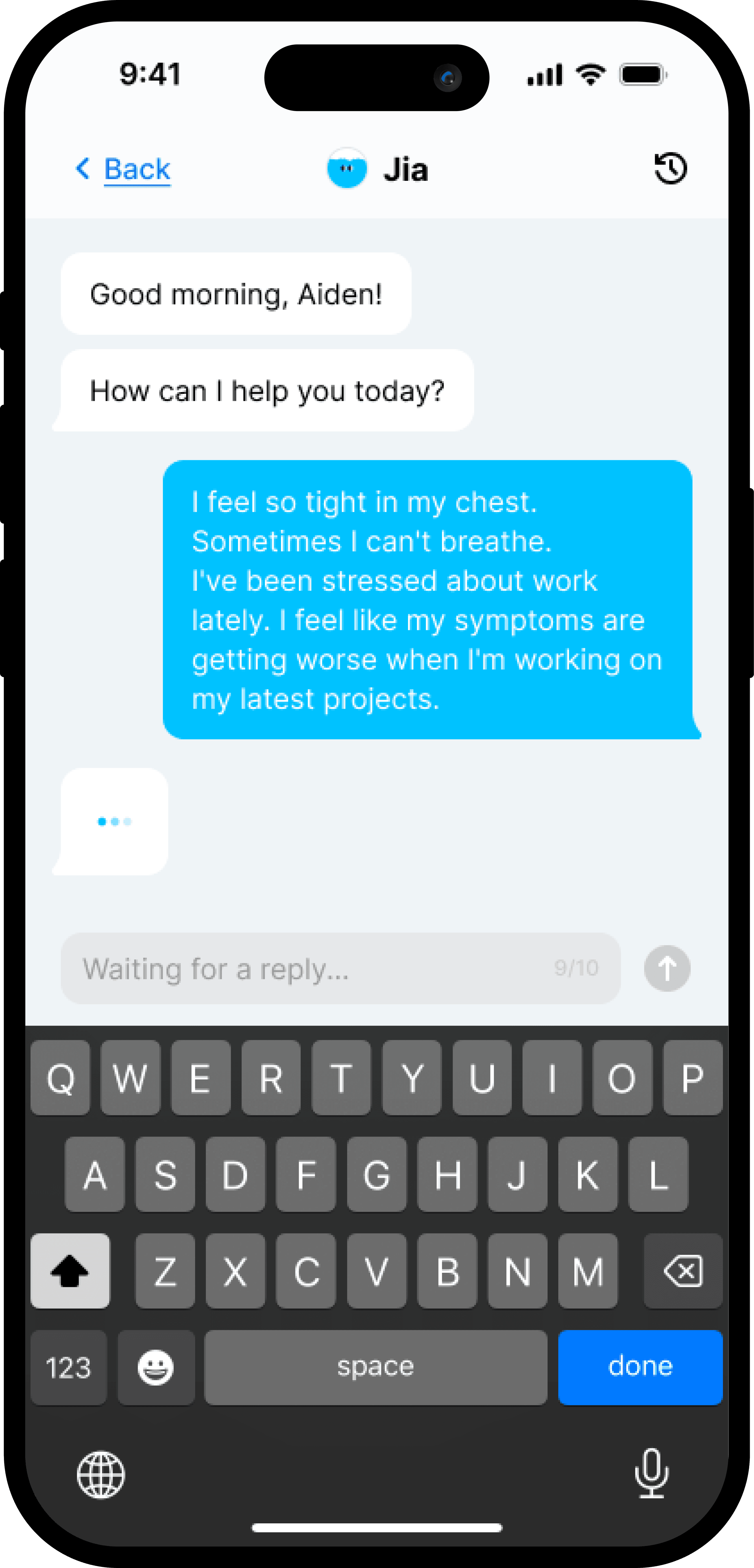
A friendly and empathetic AI mentor designed to:
Check in with users regularly
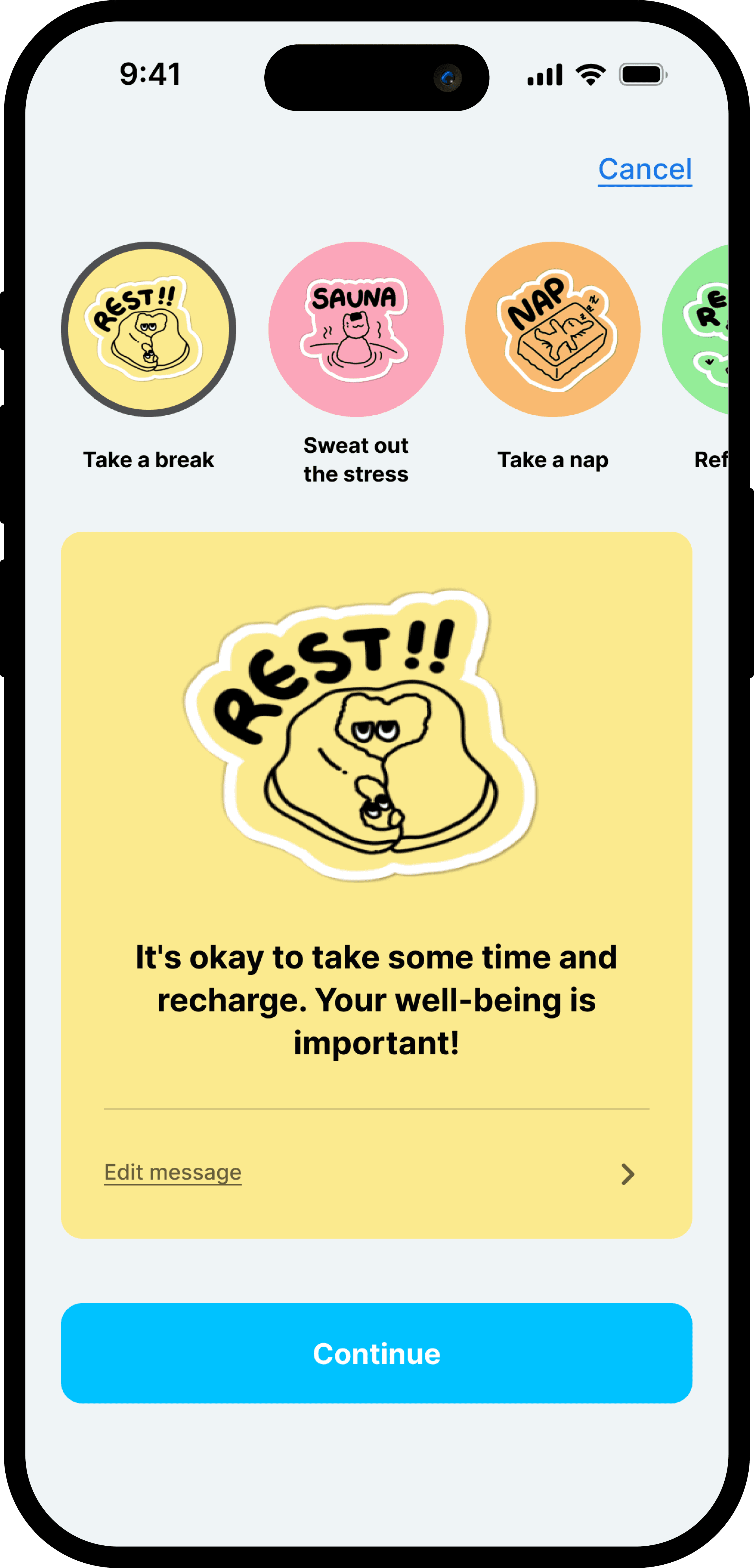
Offer small and actionable guidance
Maintain emotional safety without judgment
More Research?
New Challenge on Our Way!
We didn't know how to create an emotionally intelligent and empathetic AI bot 😰
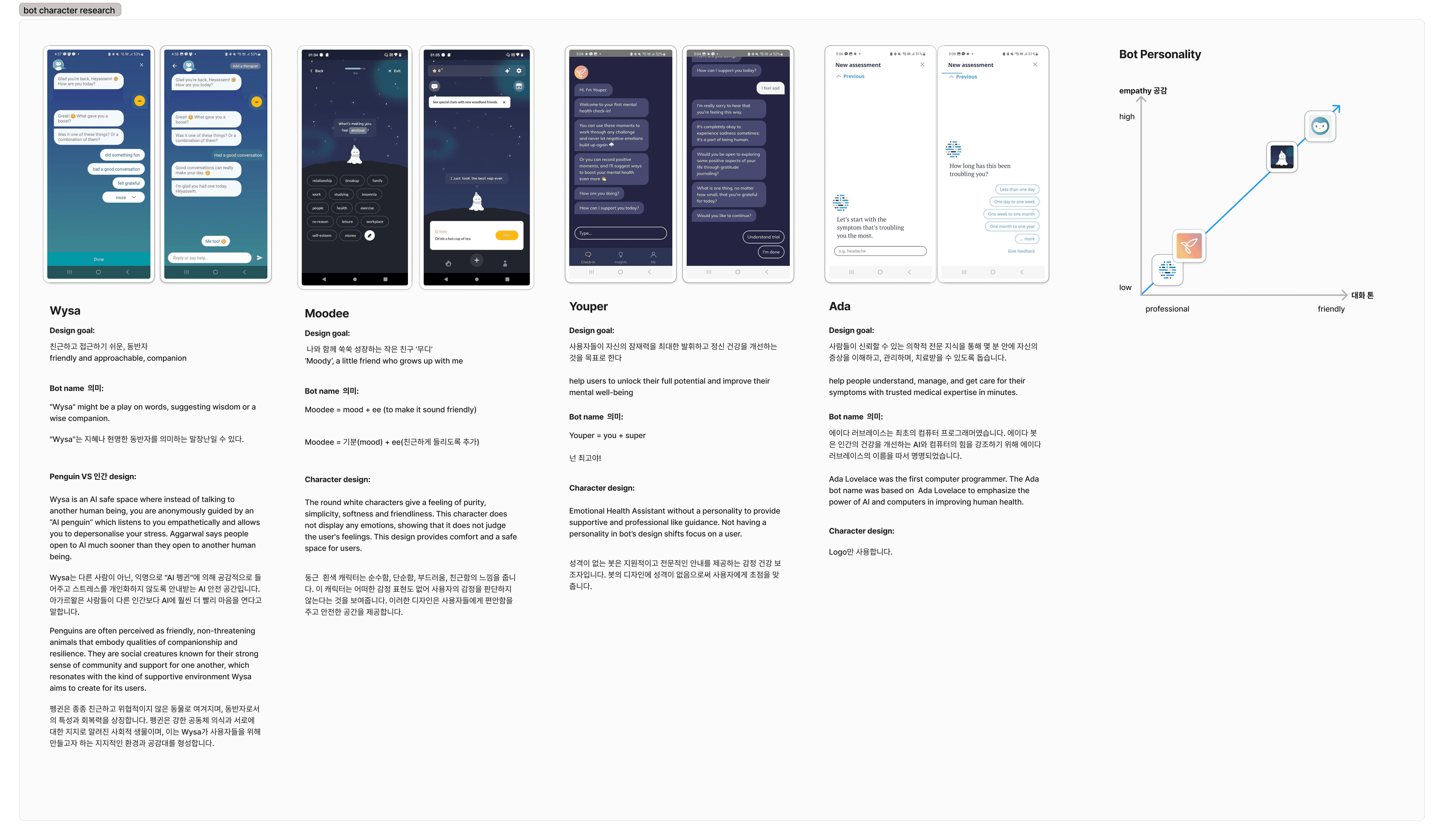
To figure this out, I read lots of articles and guidelines on developing an AI bot. Based on my research, I found that I needed to think about creating AI prompt with the bot's personality, response tone and style. That's why I analyzed other existing chatbots, including: Wysa, Moodee, Ada, and Youper.
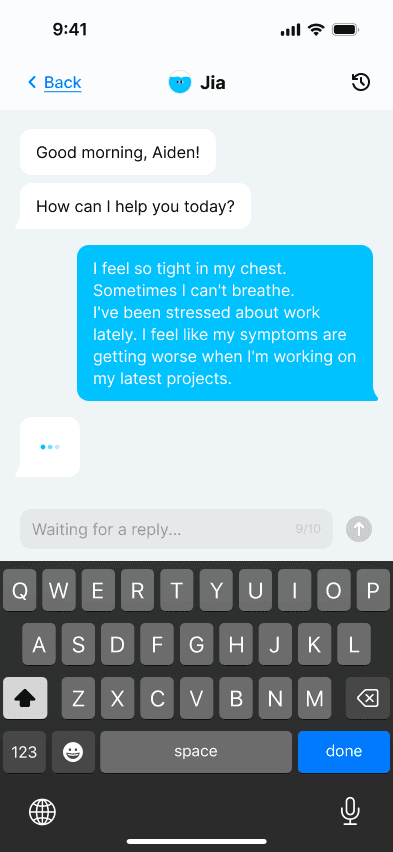
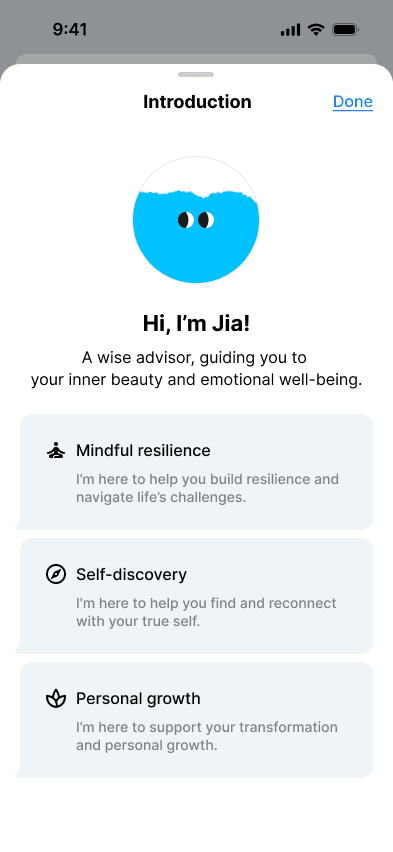
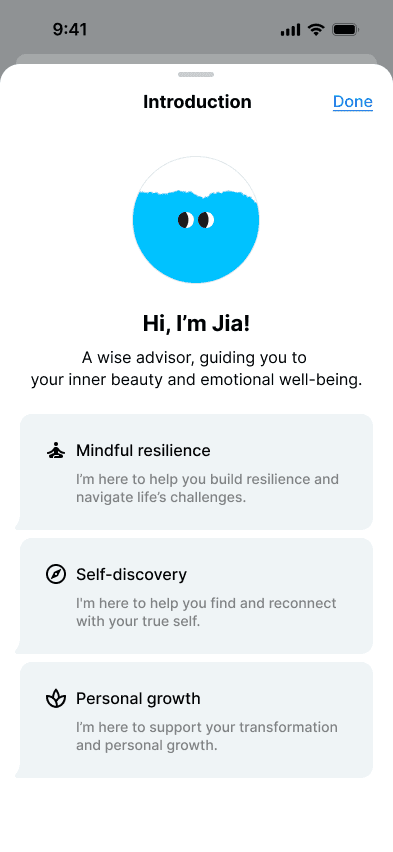
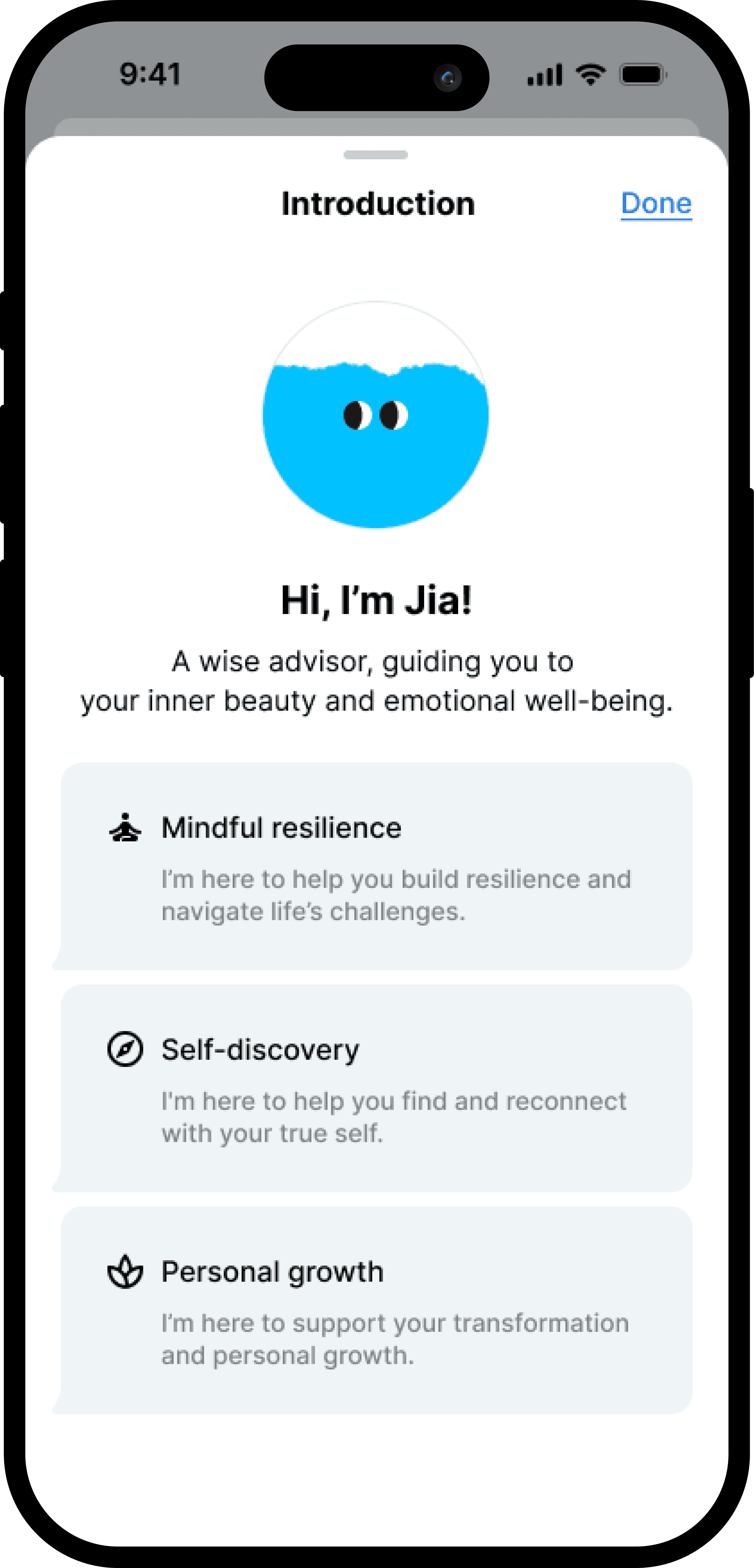
🌊 Meet Jia — your wise and gentle mentor inspired by a flowing river
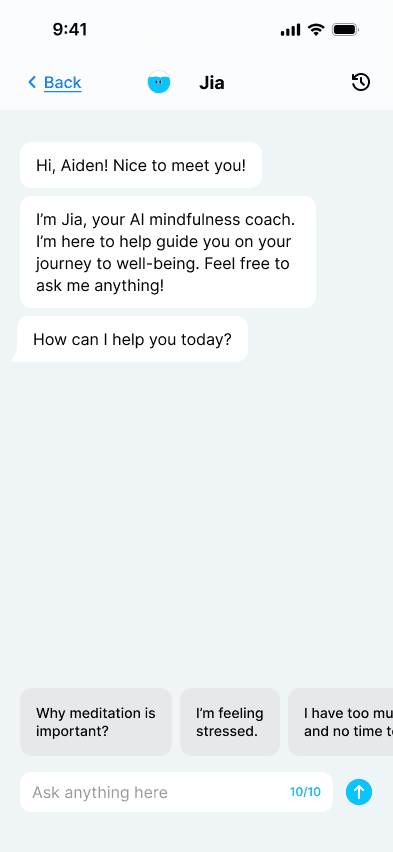
Based on research and competitor analysis insights, we wanted to create a bot that didn't felt too robotic and structured. We wanted to create a warm and gentle guiding experience. That's why I collaborated with our mindfulness mentors, AI experts, and backend teams to develop Jia.

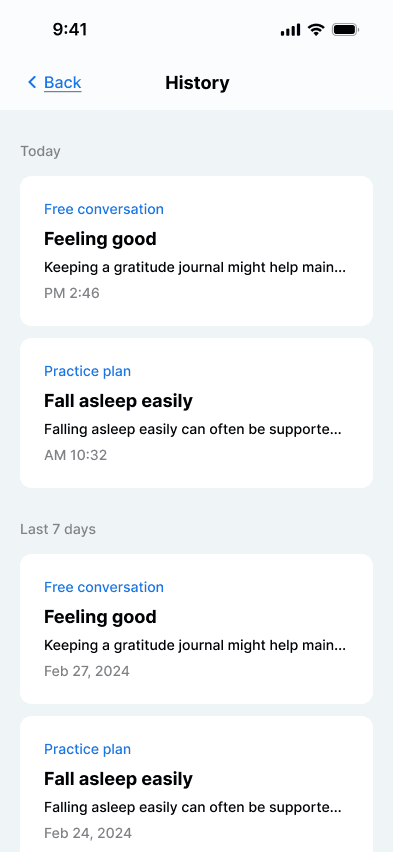
Jia AI Mindfulness Mentor UI


Reflection
Conclusion
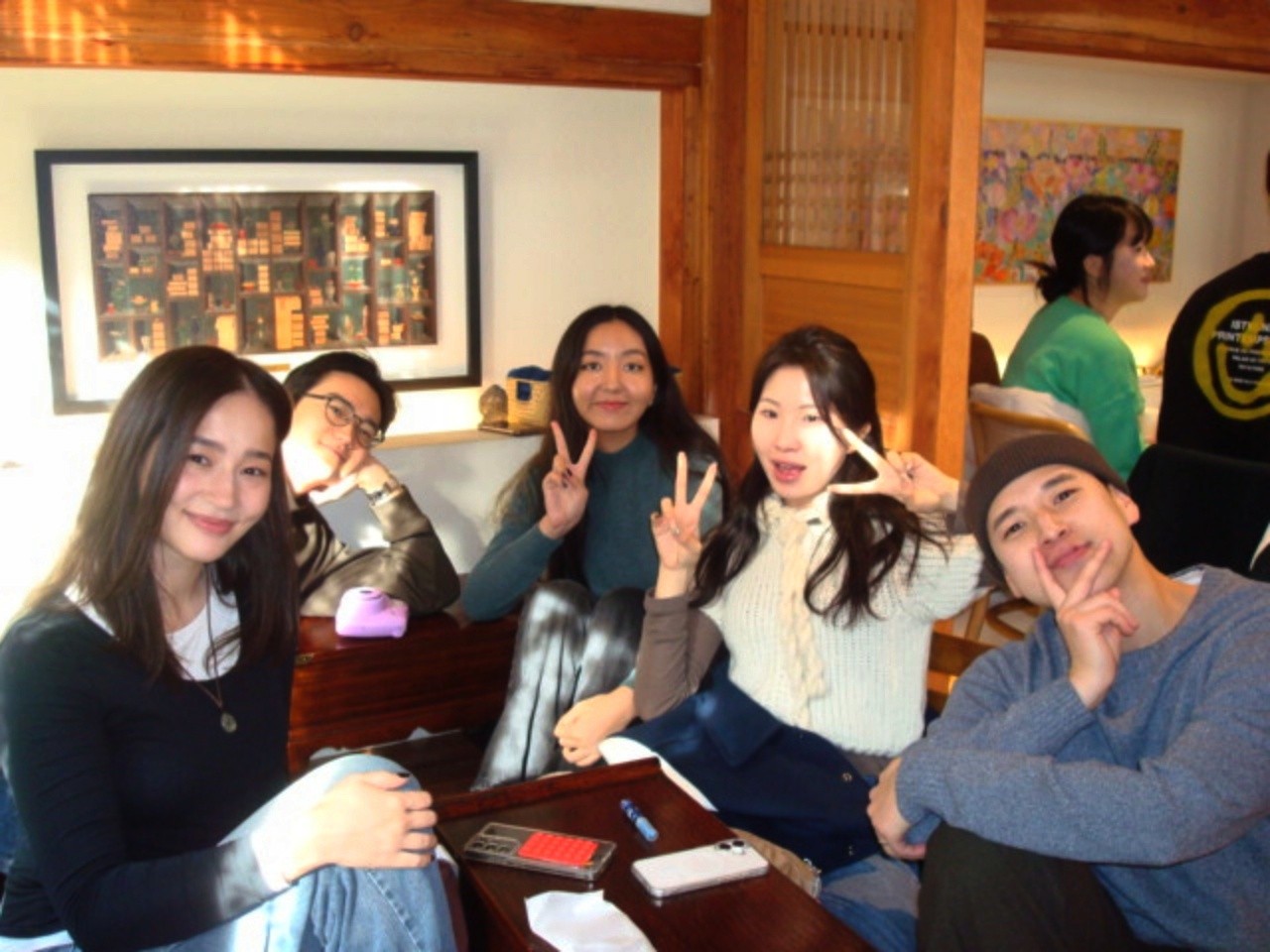
Thank you for your trust, your openness, kindness, and teaching me everything you know! Every shared idea, field trip, coffee break, and even small snacks from you turned this app into something more human and real!